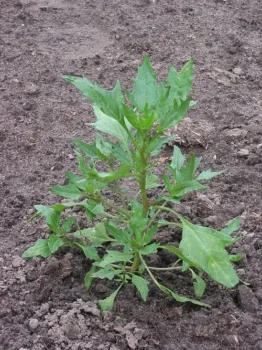
Red Goosefoot: A Hardy Native for Wetland Gardens
If you’re looking for a resilient native plant that thrives in wet conditions, red goosefoot (Chenopodium rubrum) might just be the unsung hero your garden needs. While it won’t win any beauty contests, this humble annual has earned its place in the native plant world through sheer adaptability and ecological value.
What is Red Goosefoot?
Red goosefoot is an annual forb – basically a non-woody plant that completes its entire life cycle in one growing season. Don’t let its modest appearance fool you; this plant is a powerhouse when it comes to surviving in challenging conditions. As its name suggests, the stems and leaf undersides often display reddish coloring that gives the plant its distinctive character.
This native species can reach up to 3 feet tall and grows in an upright, single-crown form. It’s a fast grower with a rapid growth rate, making it excellent for quick coverage in restoration projects or newly established wetland areas.
Where Does Red Goosefoot Grow?
Red goosefoot has an impressive geographic range, growing naturally across most of North America. You’ll find it thriving from Alaska down through most of the lower 48 states, and across much of Canada from British Columbia to the Maritime provinces. This wide distribution speaks to its remarkable adaptability to different climates and conditions.
- Species observed
- No observations
Important note for New Jersey gardeners: Red goosefoot is listed as endangered in New Jersey with a rarity status of S1. If you’re in the Garden State and want to grow this plant, make sure to source it responsibly from reputable native plant suppliers rather than collecting from wild populations.
Why Consider Red Goosefoot?
Let’s be honest – red goosefoot isn’t going to be the star of your flower garden. But here’s why you might want to give it a chance:
- Wetland champion: This plant loves wet feet and can handle conditions that would drown other species
- Soil flexibility: Adaptable to coarse, medium, or fine-textured soils
- Low maintenance: Once established, it requires minimal care
- Native benefits: Provides habitat and food sources for native wildlife
- Pioneer species: Excellent for establishing vegetation in disturbed areas
Growing Conditions and Care
Red goosefoot is refreshingly easy to please, though it does have some specific preferences:
Moisture: This plant has high moisture requirements and low drought tolerance. It’s classified as an obligate wetland plant in many regions, meaning it almost always occurs in wetlands. Perfect for those soggy spots in your yard where other plants struggle.
Soil: Prefers pH levels between 6.0 and 8.5 and has high tolerance for salty conditions. It can handle various soil textures but needs good fertility levels.
Light: Full sun lover – it’s intolerant of shade, so don’t try tucking it under trees.
Temperature: Needs at least 80 frost-free days and minimum temperatures above 52°F. Hardy in USDA zones 2-9.
Planting and Propagation
Growing red goosefoot from seed is your best bet, as it’s not typically available through commercial nurseries. The good news? This plant produces seeds in abundance – we’re talking over 7.5 million seeds per pound! Here’s how to get started:
- Direct sow seeds in late spring when soil temperatures warm up
- Seeds don’t require cold stratification, making them easy to work with
- Plant in consistently moist to wet soil
- Expect blooming in late summer followed by seed production
- The plant will likely self-seed for future years
Garden Design Ideas
Red goosefoot shines in specific landscape situations:
- Rain gardens: Perfect for managing stormwater runoff
- Wetland restoration: Excellent pioneer species for establishing vegetation
- Naturalized areas: Great for meadow-style plantings
- Bioswales: Helps filter water while providing habitat
- Pond edges: Natural choice for water feature margins
Seasonal Interest and Wildlife Value
While red goosefoot’s flowers are small and not particularly showy, they do provide late-season nectar for small pollinators. The black seeds that follow are conspicuous and provide food for birds and small mammals. The plant’s active growing period spans spring and summer, with fall interest coming mainly from its seed heads.
The Bottom Line
Red goosefoot won’t transform your garden into a showstopper, but it fills an important niche for gardeners dealing with wet conditions or those involved in restoration work. If you have challenging wet areas, poor drainage, or want to support native ecosystems, this hardy annual deserves consideration. Just remember to source responsibly, especially if you’re in areas where it has conservation concern.
Sometimes the most valuable plants are the ones that work quietly behind the scenes, and red goosefoot is definitely one of those unsung heroes of the native plant world.