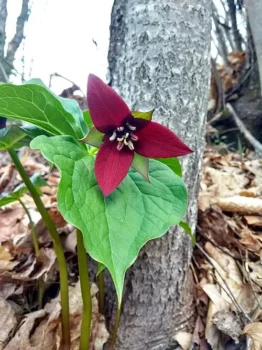
Red Trillium: The Woodland Wonder That’s Worth the Wait
If you’ve ever wandered through a spring woodland and spotted a striking three-petaled flower rising from a perfect trio of leaves, you’ve likely encountered the captivating red trillium. This native North American gem is like the patient friend who takes forever to get ready but always looks absolutely stunning when they finally arrive.
What Exactly Is Red Trillium?
Red trillium (Trillium erectum) is a perennial wildflower that belongs to the fascinating world of spring ephemerals – those clever plants that pop up, put on a show, and then quietly disappear until next year. As a forb (basically a fancy term for a non-woody flowering plant), it grows from an underground rhizome and typically reaches 8-16 inches tall and about 12 inches wide.
This woodland native is perfectly designed in threes: three broad leaves, three sepals, and three petals that range from deep maroon-red to burgundy. Occasionally, you might stumble upon white or yellow variants, making each discovery feel like finding a rare treasure.
Where Does Red Trillium Call Home?
Red trillium is a true North American native, naturally occurring across eastern Canada and throughout much of the eastern United States. You’ll find it growing wild from Alabama all the way up to Nova Scotia, and from the Atlantic coast west to Illinois and Indiana. Its natural range includes states like Connecticut, Georgia, Maine, Michigan, New York, Pennsylvania, Tennessee, Virginia, and many others in between.
- Species observed
- No observations
Why Your Shade Garden Needs Red Trillium
Let’s be honest – finding plants that actually thrive in deep shade can feel like searching for a unicorn. Red trillium is that unicorn! Here’s why it deserves a spot in your woodland garden:
- Shade superstar: Thrives in conditions where many other flowers struggle
- Native credentials: Supports local ecosystems and requires minimal intervention once established
- Spring drama: Provides early season color when most gardens are still waking up
- Architectural beauty: Those perfectly symmetrical leaves create stunning ground cover even after flowers fade
- Low maintenance: Once happy, it pretty much takes care of itself
The Perfect Spot for Your Red Trillium
Red trillium is particular about its living conditions, but once you understand its preferences, success follows naturally. Think forest floor and you’re on the right track:
- Light: Deep to partial shade (direct sunlight is a no-go)
- Soil: Rich, moist, well-draining woodland soil with plenty of organic matter
- pH: Neutral to slightly acidic (6.0-7.0)
- Moisture: Consistently moist but never waterlogged
- Climate: Hardy in USDA zones 3-8
Interestingly, red trillium’s relationship with water varies by region. In coastal areas, it’s more tolerant of moisture, while in the Midwest, it strongly prefers well-drained upland sites.
Planting and Growing Tips
Here’s where we need to talk about patience. Red trillium operates on woodland time, not garden center time. But trust the process – the payoff is absolutely worth it.
Getting Started
- Plant rhizomes in fall, about 3-4 inches deep
- Space them 12-18 inches apart
- Choose a location you won’t need to disturb – they hate being moved
- Mulch with leaf mold or shredded leaves to mimic natural conditions
Care and Maintenance
- Water during dry spells, especially in spring
- Add compost annually to maintain soil richness
- Avoid fertilizers – they prefer natural, organic nutrition
- Never harvest from wild populations
- Allow leaves to die back naturally to feed the rhizome
Supporting Local Wildlife
While red trillium might not be a butterfly magnet, it plays its own important ecological role. The flowers attract flies and beetles with their subtle (some say earthy) fragrance, and these pollinators help ensure the next generation of plants. The resulting seeds are dispersed by ants, creating new colonies over time.
Design Ideas and Companion Plants
Red trillium shines brightest when allowed to naturalize in woodland settings. Consider pairing it with other native woodland plants like wild ginger, mayapple, bloodroot, and ferns. The combination creates a tapestry that changes throughout the seasons while maintaining that authentic woodland feel.
For more formal shade gardens, use red trillium as accent plants among hostas and astilbe, though remember that the trilliums will go dormant by midsummer.
The Bottom Line
Red trillium isn’t for gardeners seeking instant gratification, but for those willing to invest in long-term woodland beauty, few plants deliver such reliable, low-maintenance elegance. Its native status means you’re supporting local ecosystems while creating a garden that feels authentically connected to the surrounding landscape.
Yes, you’ll need patience. Yes, you’ll need the right shady, rich conditions. But once established, red trillium will reward you with decades of spring magic that gets more impressive with each passing year. In a world of fast-fashion gardening, sometimes the slow-and-steady approach creates the most lasting beauty.