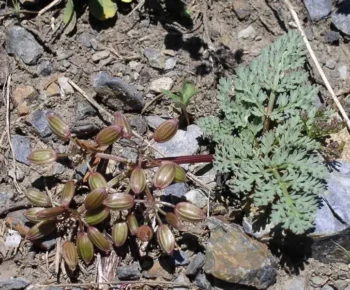
Redfruit Desertparsley: A Rare Oregon Native Worth Protecting
Meet redfruit desertparsley (Lomatium erythrocarpum), one of Oregon’s most precious botanical treasures. This delicate perennial forb might not be the showiest plant in your garden, but it’s certainly one of the most special – and that’s precisely why we need to talk about growing it responsibly.
What Makes Redfruit Desertparsley Special?
Redfruit desertparsley is a herbaceous perennial that belongs to the carrot family, and like many of its Lomatium cousins, it’s perfectly adapted to dry, challenging conditions. What sets this species apart is its distinctive reddish fruits that give the plant its common name, along with its extremely limited range.
The plant produces delicate clusters of small white to pinkish flowers arranged in umbrella-like formations called umbels – think Queen Anne’s lace, but much more refined. Its foliage is finely divided and fern-like, creating a soft, textural element in the landscape even when not in bloom.
A True Oregon Original
This remarkable plant is endemic to Oregon, meaning it grows naturally nowhere else on Earth. Within Oregon, its range is quite limited, making it a true regional specialty. As a native species, redfruit desertparsley has co-evolved with local wildlife and fits perfectly into Oregon’s natural ecosystems.
- Species observed
- No observations
The Rarity Factor: Why This Matters
Here’s where things get serious: redfruit desertparsley has a conservation status of S1S2, which means it’s considered rare to imperiled. This isn’t a plant you’ll find at your local nursery, nor should you dig it up from the wild (please don’t ever do this with any native plant!).
If you’re interested in growing this species, you’ll need to source it from reputable native plant nurseries that propagate from ethically collected seed. Even then, availability will be extremely limited.
Growing Redfruit Desertparsley: For the Dedicated Native Gardener
If you’re fortunate enough to obtain responsibly sourced redfruit desertparsley, here’s what you need to know about keeping it happy:
Ideal Growing Conditions
- Full sun exposure
- Extremely well-draining soil – think rocky, gravelly, or sandy
- Drought conditions once established
- USDA hardiness zones 7-9
- Minimal to no supplemental watering after the first year
Planting and Care Tips
- Plant in fall or very early spring
- Avoid heavy, clay soils or areas that stay wet
- Once established, resist the urge to pamper – this plant thrives on benign neglect
- No fertilization needed (and often harmful)
- Allow natural seed dispersal to occur
Wildlife and Pollinator Benefits
Like other Lomatium species, redfruit desertparsley is valuable for native pollinators, particularly native bees and beneficial insects. The flowers provide nectar and pollen during their blooming period, and the plant serves as part of the complex web of native plant-pollinator relationships that have developed over thousands of years.
Garden Design Role
This isn’t a plant for every garden. Redfruit desertparsley is best suited for:
- Specialized native plant gardens
- Rock gardens with excellent drainage
- Xerophytic (dry) landscapes
- Conservation gardens focused on rare Oregon natives
- Educational displays about local flora
Should You Grow It?
The honest answer? Probably not, unless you’re a serious native plant enthusiast with access to responsibly sourced material and the right growing conditions. This plant’s rarity means it should be grown primarily for conservation purposes rather than general landscaping.
If you’re interested in similar plants that are more readily available, consider other Lomatium species native to your area, or explore the wonderful world of more common native wildflowers that can provide similar ecological benefits without the conservation concerns.
The Bottom Line
Redfruit desertparsley represents the incredible diversity and specialization found in our native flora. While most of us won’t have the opportunity to grow this rare beauty, knowing about it helps us appreciate the complexity and fragility of our native ecosystems. If you do have the chance to grow it, consider yourself a steward of something truly precious.
Sometimes the greatest act of plant love is simply protecting what already exists in the wild and choosing more common natives for our gardens. There’s no shortage of beautiful, beneficial native plants that can thrive in cultivation – let’s give this rare gem the space it needs to survive in its natural Oregon home.