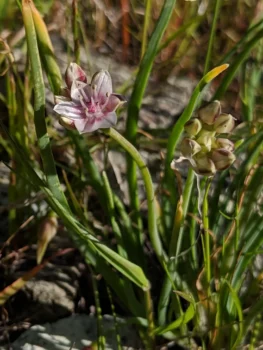
Redskin Onion: A Rare California Native Worth Protecting in Your Garden
If you’re passionate about California native plants and want to support local biodiversity, the redskin onion might just capture your heart. This charming little bulb, scientifically known as Allium haematochiton, is a true California endemic that deserves a special place in native plant gardens—but with an important caveat we’ll discuss below.
What Makes Redskin Onion Special?
The redskin onion is a perennial herb that belongs to the same family as garlic and other culinary onions, but this wild cousin is all about natural beauty rather than flavor. As a forb, it’s an herbaceous plant that lacks woody stems but returns year after year from its underground bulb.
You might also encounter this plant listed under its synonym, Allium marvinii Davidson, in older botanical references, but Allium haematochiton is the accepted scientific name today.
Where Does Redskin Onion Call Home?
This native beauty is found exclusively in California, making it a true Golden State endemic. Its natural range includes various habitats throughout the state, from coastal areas to inland mountain regions.
- Species observed
- No observations
A Plant That Needs Our Help
Important Conservation Note: Redskin onion has a critical conservation status of S1, meaning it’s critically imperiled due to extreme rarity. With typically five or fewer occurrences and very few remaining individuals (fewer than 1,000), this plant is teetering on the edge of extinction.
If you’re considering adding redskin onion to your garden, please ensure you source it only from reputable native plant nurseries that propagate their own stock—never collect from wild populations. By growing responsibly sourced redskin onions, you’re actually helping preserve this rare species.
Garden Appeal and Landscape Role
Despite its rarity in the wild, redskin onion can be a delightful addition to the right garden setting. This plant produces clusters of pink to rose-colored flowers arranged in attractive umbels (think of an umbrella-shaped flower head). The narrow, grass-like leaves provide subtle texture, and the overall effect is both delicate and charming.
In landscape design, redskin onion works beautifully in:
- California native plant gardens
- Rock gardens and naturalized areas
- Mediterranean-style drought-tolerant landscapes
- Conservation gardens focused on rare species preservation
Growing Conditions and Care
Like many California natives, redskin onion has adapted to the state’s Mediterranean climate and prefers conditions that mimic its natural habitat:
- Sunlight: Full sun to partial shade
- Soil: Well-draining soils are essential—this plant won’t tolerate soggy conditions
- Water: Drought-tolerant once established, requiring minimal supplemental irrigation
- Climate zones: Best suited for USDA zones 8-10, matching California’s climate patterns
Planting and Care Tips
Successfully growing redskin onion requires understanding its natural lifecycle:
- Plant bulbs in fall when temperatures begin to cool
- Choose a location with excellent drainage to prevent bulb rot
- Allow the plant to go dormant naturally during summer months
- Avoid overwatering, especially during the dormant period
- Mulch lightly around plants to suppress weeds while allowing good air circulation
Supporting Pollinators and Wildlife
The flowers of redskin onion are valuable nectar sources for native California bees, butterflies, and other pollinators. By growing this plant, you’re providing crucial habitat for insects that have co-evolved with California’s native flora over thousands of years.
The Bottom Line
Redskin onion represents both an opportunity and a responsibility for California gardeners. While it can be a beautiful and meaningful addition to native plant gardens, its critically imperiled status means we must approach cultivation thoughtfully. Only purchase from reputable sources that propagate their own plants, and consider yourself a conservation steward helping to preserve a piece of California’s natural heritage.
If you can’t find responsibly sourced redskin onion, consider other native Allium species that are more common and readily available. Every native plant in your garden makes a difference for local ecosystems, and sometimes the best choice is the one that doesn’t put additional pressure on wild populations.