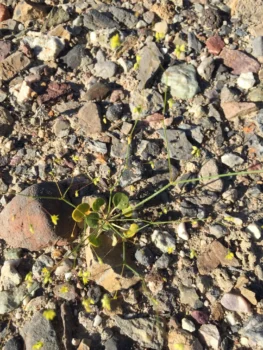
Reveal’s Buckwheat: A Rare Desert Gem Worth Protecting
Meet Reveal’s buckwheat (Eriogonum contiguum), a delicate annual wildflower that’s become something of a botanical treasure in the American Southwest. This unassuming little plant might not win any flashy flower contests, but it holds a special place in the hearts of native plant enthusiasts and conservationists alike.
Why This Plant Deserves Your Attention
Here’s where things get serious, folks. Reveal’s buckwheat is what botanists call imperiled, with a conservation status of S2. What does that mean in plain English? There are only about 6 to 20 known populations of this plant left in the wild, with roughly 1,000 to 3,000 individual plants hanging on in California and Nevada. That’s not many when you think about it!
Important note for gardeners: If you’re considering adding this rare beauty to your garden, please make sure you’re getting seeds or plants from responsible, ethical sources that don’t impact wild populations. Better yet, consider this an opportunity to support conservation efforts.
Where You’ll Find It in the Wild
Reveal’s buckwheat calls the desert regions of California and Nevada home. It’s perfectly adapted to the harsh, arid conditions of the American Southwest, where summer temperatures soar and rainfall is scarce.
- Species observed
- No observations
What Does It Look Like?
Don’t expect towering garden drama from this one. As an annual forb (that’s botanist-speak for a non-woody herbaceous plant), Reveal’s buckwheat stays relatively small and delicate. Like its buckwheat cousins, it produces clusters of tiny white to pinkish flowers that may look modest but pack a punch when it comes to supporting local wildlife.
Garden Appeal and Design Role
This isn’t your typical backyard flower, but it has its place in specialized gardens:
- Desert and xeriscape gardens: Perfect for authentic southwestern landscapes
- Native plant collections: A must-have for serious native plant enthusiasts
- Conservation gardens: Ideal for gardeners passionate about preserving rare species
- Rock gardens: Thrives in well-draining, rocky conditions
Wildlife and Pollinator Benefits
While small, Reveal’s buckwheat pulls its weight in the ecosystem. The flowers attract various native bees and other desert pollinators who have co-evolved with this plant over thousands of years. By growing it, you’re supporting the intricate web of desert life that depends on native plants.
Growing Conditions and Care
Here’s where Reveal’s buckwheat gets a bit demanding – but in a leave me alone kind of way:
- Soil: Must have excellent drainage; sandy or rocky soils are ideal
- Water: Drought-tolerant once established; actually prefers dry conditions
- Sun exposure: Full sun is essential
- Climate: Suited for USDA zones 8-10, matching its native desert range
- Maintenance: Less is more – this plant thrives on neglect
Planting and Care Tips
Growing Reveal’s buckwheat successfully means thinking like a desert:
- Plant in fall for spring growth and flowering
- Ensure drainage is absolutely perfect – soggy soil is a death sentence
- Water sparingly, if at all, once established
- Avoid fertilizers and rich soils that this desert native can’t handle
- Let it self-seed naturally for the most authentic approach
The Bottom Line
Should you grow Reveal’s buckwheat? If you’re passionate about conservation, have the right growing conditions, and can source it responsibly, absolutely! This rare annual offers a unique opportunity to participate in preserving a piece of America’s botanical heritage. Just remember – with great rarity comes great responsibility. Make sure your gardening choices support, rather than threaten, wild populations of this imperiled desert dweller.
While it may not be the showiest plant in your garden, Reveal’s buckwheat connects you to the wild, rugged beauty of the American Southwest and the important work of plant conservation. Sometimes the smallest flowers carry the biggest responsibilities.