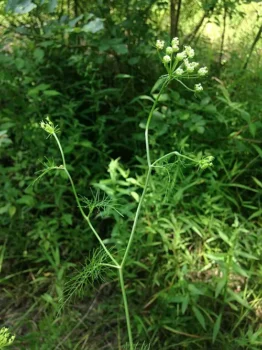
Ribbed Mock Bishopweed: A Rare Native Annual for Wet Gardens
Looking for a delicate native annual to add to your wetland garden or rain garden? Meet ribbed mock bishopweed (Ptilimnium costatum), a charming little wildflower that’s perfectly at home in soggy soils where many other plants fear to tread. This slender beauty might not be the showiest plant in your garden, but it’s got character – and it’s doing important work for local ecosystems.
What Is Ribbed Mock Bishopweed?
Ribbed mock bishopweed is an annual forb native to the southeastern and south-central United States. As a member of the carrot family, it produces those classic umbrella-shaped flower clusters (called umbels) that look like tiny white fireworks exploding in your garden. The plant typically grows 1-3 feet tall with delicate, finely divided foliage that gives it an almost feathery appearance.
Don’t let the mock in its name fool you – this plant is the real deal when it comes to native gardening. It’s a true American original, naturally occurring across eleven states from Texas to North Carolina.
Where Does It Grow Naturally?
This native beauty calls home to Alabama, Arkansas, Georgia, Illinois, Kentucky, Louisiana, Missouri, North Carolina, Oklahoma, Tennessee, and Texas. It’s particularly fond of wet meadows, pond edges, and other moisture-rich habitats.
- Species observed
- No observations
A Word of Caution: This Plant Is Rare
Here’s something important to know before you start planning your planting: ribbed mock bishopweed is considered rare in some states, with a rarity status of S1 (critically imperiled) in both Alabama and Arkansas. This means if you want to grow this lovely native, you absolutely must source your seeds or plants responsibly from reputable native plant nurseries – never collect from wild populations.
Why Grow Ribbed Mock Bishopweed?
Despite its rarity challenges, there are compelling reasons to include this plant in your garden:
- Native credentials: It supports local ecosystems and belongs in your region’s natural plant community
- Pollinator magnet: The small white umbel flowers attract bees, flies, and other beneficial insects
- Wet soil specialist: Perfect for those challenging soggy spots where other plants struggle
- Low maintenance: As an annual, it does its thing and disappears, often self-seeding for next year
- Delicate beauty: Adds texture and movement to naturalized plantings
Perfect Garden Spots
Ribbed mock bishopweed isn’t meant for formal flower beds or manicured landscapes. Instead, it shines in:
- Rain gardens and bioswales
- Native wildflower meadows
- Pond or stream edges
- Wet prairie restorations
- Naturalized areas with consistent moisture
Growing Conditions
This plant is pretty specific about what it wants, and what it wants is water – lots of it. In wetland classification terms, it’s considered Facultative Wetland in some regions and Obligate Wetland in others, meaning it usually or almost always occurs in wetlands.
Here’s what ribbed mock bishopweed needs to thrive:
- Moisture: Consistently moist to wet soils
- Light: Full sun to partial shade
- Soil: Tolerates various soil types as long as they stay moist
- Hardiness zones: 6-9
Planting and Care Tips
Growing ribbed mock bishopweed successfully is all about timing and moisture management:
- When to plant: Direct seed in fall or early spring when temperatures are cool
- Seeding: Scatter seeds on the soil surface and lightly rake in – they need light to germinate
- Watering: Keep soil consistently moist throughout the growing season
- Maintenance: Minimal care needed once established; allow plants to self-seed
- Patience: Seeds may take several weeks to germinate
The Bottom Line
Ribbed mock bishopweed might not be the easiest native plant to find or grow, but for gardeners with wet conditions and a commitment to supporting rare native species, it’s a rewarding choice. Just remember to source it responsibly – this little beauty needs our help to stick around for future generations.
If you can’t find responsibly sourced ribbed mock bishopweed, consider other native wetland annuals like marsh pink (Sabatia) or native sedges that can provide similar ecological benefits while being more readily available.