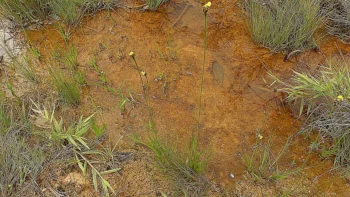
Richard’s Yelloweyed Grass: A Delicate Native Beauty for Your Wetland Garden
If you’re looking to add a touch of understated elegance to your rain garden or wetland area, Richard’s yelloweyed grass (Xyris jupicai) might just be the perfect native plant for you. This charming little wildflower brings subtle beauty to wet spaces where many other plants simply can’t thrive.
What is Richard’s Yelloweyed Grass?
Richard’s yelloweyed grass is a native North American perennial that belongs to the yelloweyed grass family. Despite its common name, it’s not actually a grass at all – it’s an herbaceous flowering plant that happens to have grass-like leaves. The plant produces delicate yellow flowers on slender stems that rise above narrow, linear foliage, creating a soft, naturalistic appearance that’s perfect for wildlife-friendly gardens.
This species is also known by several botanical synonyms, including Xyris arenicola, Xyris communis, and Xyris elata, so don’t be confused if you see these names in older gardening references.
Where Does It Grow Naturally?
Richard’s yelloweyed grass is native to a large swath of the United States, naturally occurring from the southeastern states up through the mid-Atlantic region and west into Texas and Oklahoma. You can find it growing wild in Alabama, Arkansas, Delaware, District of Columbia, Florida, Georgia, Illinois, Louisiana, Mississippi, Missouri, New Jersey, North Carolina, Oklahoma, South Carolina, Tennessee, Texas, Virginia, and Puerto Rico.
- Species observed
- No observations
A Plant That Loves Its Water
Here’s the most important thing to know about Richard’s yelloweyed grass: it’s what botanists call an obligate wetland plant. This means it almost always occurs in wetlands and requires consistently moist to saturated soil conditions to thrive. If you’re dreaming of adding this plant to a dry, well-drained border, you’ll want to think again!
Perfect for Specialized Garden Spaces
Richard’s yelloweyed grass shines in specific garden situations:
- Rain gardens and bioswales
- Bog gardens and wetland restorations
- Pond edges and stream banks
- Native plant gardens with consistent moisture
- Naturalistic plantings in wet areas
The plant’s delicate yellow flowers and grass-like texture provide a lovely contrast to broader-leaved wetland plants and add vertical interest to wet garden areas.
Growing Conditions and Care
Successfully growing Richard’s yelloweyed grass is all about mimicking its natural wetland habitat:
- Sunlight: Full sun is preferred, though it can tolerate some light shade
- Soil: Consistently moist to saturated, acidic soils work best
- Water: Keep soil constantly moist – this plant does not tolerate drought
- USDA Hardiness Zones: 6-10, making it suitable for much of the continental United States
Planting and Maintenance Tips
Plant Richard’s yelloweyed grass in spring after the last frost. The key to success is ensuring consistent moisture – if your soil ever dries out completely, this plant will struggle. Fortunately, once established in the right conditions, it requires minimal care. There’s no need for fertilization, and the plant will naturally self-seed in suitable conditions.
Supporting Wildlife
Like many native plants, Richard’s yelloweyed grass provides important benefits for local wildlife. Its small yellow flowers attract native pollinators, particularly small bees and flies that appreciate the nectar source. The plant also contributes to the overall health of wetland ecosystems.
A Word About Conservation
If you live in New Jersey, it’s worth noting that Richard’s yelloweyed grass has a conservation status of Highlands Listed, S3, indicating it’s somewhat uncommon in the state. While this doesn’t prohibit planting it, we recommend sourcing your plants from reputable native plant nurseries that propagate their stock responsibly rather than wild-collecting.
Is Richard’s Yelloweyed Grass Right for Your Garden?
This native beauty is perfect for gardeners who:
- Have consistently wet or boggy areas in their landscape
- Want to create wildlife habitat with native plants
- Appreciate subtle, naturalistic garden design
- Are working on wetland restoration or rain garden projects
However, it’s not the right choice if you have dry, well-drained soil or are looking for a low-water garden plant. Richard’s yelloweyed grass is quite specific about its moisture requirements!
For gardeners with the right growing conditions, Richard’s yelloweyed grass offers a wonderful opportunity to incorporate a truly native plant that supports local ecosystems while adding delicate beauty to wet garden spaces. Its undemanding nature and wildlife benefits make it a rewarding choice for the environmentally conscious gardener.