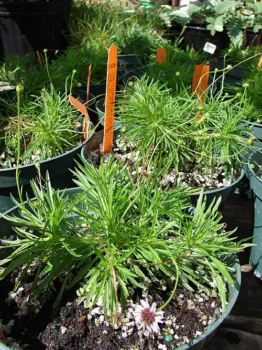
Ridgetop Tetramolopium: A Rare Hawaiian Native Worth Protecting
If you’re passionate about native Hawaiian plants and conservation gardening, you may have heard whispers about the ridgetop tetramolopium (Tetramolopium filiforme). This delicate perennial shrub is one of Hawaii’s botanical treasures – and unfortunately, one of its most endangered plants.
What Makes Ridgetop Tetramolopium Special?
The ridgetop tetramolopium is a charming multi-stemmed woody perennial that typically stays compact, usually growing less than 13-16 feet tall. Don’t let its modest size fool you – this little powerhouse produces beautiful daisy-like flowers and has adapted to some of the most challenging growing conditions in Hawaii.
As its name suggests, this native Hawaiian species thrives on ridgetops and high-elevation areas, where it has evolved to handle intense sun, volcanic soils, and dramatic temperature swings.
Where Does It Grow?
Ridgetop tetramolopium is endemic to Hawaii, meaning it grows naturally nowhere else on Earth. You’ll find it clinging to life in the high-elevation areas of Maui and Hawaii Island, where it has adapted to harsh alpine conditions.
- Species observed
- No observations
A Plant in Crisis: Understanding Its Rarity
Here’s what every gardener needs to know: Ridgetop tetramolopium has a Global Conservation Status of S1, meaning it’s critically imperiled. In the United States, it’s listed as Endangered. With typically five or fewer occurrences and very few remaining individuals (less than 1,000), this plant is hanging on by a thread.
What does this mean for gardeners? If you’re considering growing ridgetop tetramolopium, you have a responsibility to ensure your plant material comes from ethical, conservation-focused sources – never from wild collection.
Should You Grow Ridgetop Tetramolopium?
The short answer is: only if you can source it responsibly. Here’s why you might want to consider it:
- You’re contributing to conservation efforts by growing a critically endangered species
- It’s a unique addition to specialized native Hawaiian plant collections
- The plant offers educational value about Hawaii’s rare native flora
- It supports native pollinators when grown in appropriate settings
However, this isn’t a plant for casual gardeners. It requires specific conditions and carries the weight of conservation responsibility.
Garden Design and Landscape Role
Ridgetop tetramolopium works best in:
- Conservation gardens focused on rare Hawaiian natives
- Educational botanical displays
- Specialized alpine or high-elevation gardens
- Native Hawaiian restoration projects
Its compact, multi-stemmed growth habit makes it suitable for rock gardens or as a specimen plant where its unique story can be shared with visitors.
Growing Conditions and Care
If you’re committed to growing ridgetop tetramolopium responsibly, here’s what it needs:
Climate: USDA hardiness zones 10-11, but remember – it’s adapted to high-elevation conditions, so it prefers cooler temperatures than typical tropical plants.
Sun and Soil: Full sun with excellent drainage is non-negotiable. Think volcanic, rocky soils that drain quickly. Heavy, clay soils will likely kill this plant.
Water: Once established, it prefers low to moderate water. Overwatering is a common mistake that can lead to root rot.
Special Considerations: Protect from strong winds and ensure good air circulation. This plant has evolved for specific conditions that can be challenging to replicate in typical garden settings.
The Bottom Line
Ridgetop tetramolopium represents both an incredible opportunity and a serious responsibility. Growing this critically endangered Hawaiian native can contribute to conservation efforts – but only when done thoughtfully with properly sourced plants.
If you’re not prepared to meet its specific needs or can’t ensure responsible sourcing, consider supporting conservation organizations working to protect this species in its natural habitat instead. Sometimes the best way to help a rare plant is to support its protection in the wild.
For those ready to take on the challenge, ridgetop tetramolopium offers a chance to nurture one of Hawaii’s most precious botanical survivors while contributing to its long-term conservation.