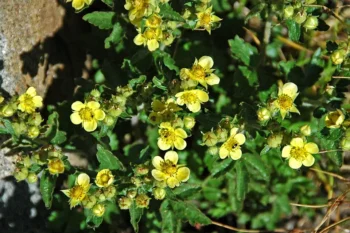
Rocky Mountain Cinquefoil: A Hardy Native Groundcover for Challenging Gardens
If you’re looking for a tough-as-nails native plant that can handle whatever Mother Nature throws at it, let me introduce you to Rocky Mountain cinquefoil (Potentilla rubricaulis). This unassuming little perennial might just become your new best friend in the garden, especially if you’re dealing with difficult growing conditions or want to create a low-maintenance landscape that supports local wildlife.
What is Rocky Mountain Cinquefoil?
Rocky Mountain cinquefoil is a native perennial forb that belongs to the rose family. Don’t let the fancy botanical classification fool you – this is simply a non-woody flowering plant that comes back year after year. As its name suggests, this hardy little trooper calls the mountainous regions of North America home, where it has learned to thrive in some pretty challenging conditions.
The plant forms low-growing mats with distinctive compound leaves that typically have five leaflets (hence cinquefoil, which means five leaves). In late spring and summer, it produces cheerful yellow flowers that may be small, but they pack a punch when it comes to attracting pollinators.
Where Does It Come From?
This native beauty has quite an impressive range! Rocky Mountain cinquefoil is native to Alaska, Canada (including Greenland), and several states in the lower 48. You’ll find it growing wild in Alberta, Alaska, Manitoba, Colorado, Yukon, Northwest Territories, Nunavut, Montana, Nevada, New Mexico, Utah, and Wyoming. Talk about a plant that knows how to get around!
- Species observed
- No observations
Why You Might Want to Grow It
Here’s where Rocky Mountain cinquefoil really shines – it’s the perfect plant for gardeners who want maximum impact with minimal effort. Here are some compelling reasons to give it a try:
- Drought Tolerance: Once established, this plant laughs in the face of dry spells
- Cold Hardy: Thriving in USDA zones 3-7, it can handle serious winter weather
- Low Maintenance: Perfect for busy gardeners or those new to native plants
- Pollinator Friendly: Those sunny yellow blooms attract bees, flies, and other beneficial insects
- Native Plant Benefits: Supports local ecosystems and requires fewer resources than non-native alternatives
Perfect Garden Spots
Rocky Mountain cinquefoil isn’t picky, but it does have its preferences. This adaptable plant works wonderfully in:
- Rock gardens where its low-growing habit complements stones and boulders
- Alpine or mountain-themed landscapes
- Xeriscaping projects where water conservation is key
- Naturalized areas where you want a wild, meadow-like feel
- Challenging slopes or areas with poor soil where other plants struggle
Growing Conditions
The good news is that Rocky Mountain cinquefoil isn’t high-maintenance. It prefers full sun to partial shade and absolutely insists on well-draining soil – this is one plant that really doesn’t appreciate wet feet! In fact, its wetland status is classified as Facultative Upland, meaning it typically grows in non-wetland areas but can occasionally tolerate some moisture.
Once established, this tough little plant is quite drought tolerant, making it an excellent choice for areas that don’t receive regular irrigation or for gardeners in water-restricted regions.
Planting and Care Tips
Here’s how to set your Rocky Mountain cinquefoil up for success:
- Soil Preparation: Ensure excellent drainage – amend heavy clay soils with sand or gravel
- Planting Time: Spring or fall are ideal planting times
- Watering: Water regularly the first year to establish roots, then reduce frequency
- Maintenance: Minimal pruning needed; deadhead spent flowers if desired
- Fertilizing: Generally unnecessary – this plant prefers lean soils
A Word About Responsible Sourcing
Before you rush out to get your hands on some Rocky Mountain cinquefoil, there’s something important to know. This plant has an unclear conservation status, which means we need to be thoughtful about where we source our plants. Always purchase from reputable nurseries that propagate their own plants rather than collecting from the wild. This ensures wild populations remain undisturbed while still allowing you to enjoy this wonderful native in your garden.
The Bottom Line
Rocky Mountain cinquefoil might not be the flashiest plant in the garden center, but it’s definitely one of the most reliable. If you’re looking for a native groundcover that can handle tough conditions while providing food for pollinators and requiring minimal care, this hardy little perennial deserves a spot in your landscape. Just remember to source it responsibly, and you’ll have a beautiful, low-maintenance addition to your garden that truly belongs in your local ecosystem.