The Elusive Rosebud Orchid: A Native Gem Worth Protecting
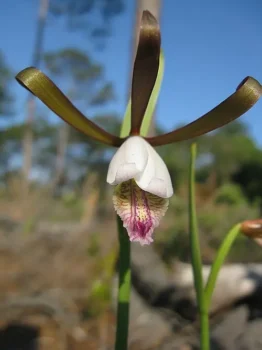
Meet the rosebud orchid (Cleistes divaricata), one of North America’s most enchanting yet challenging native wildflowers. This delicate perennial orchid gets its charming common name from its distinctive pink to purple blooms that resemble tiny rosebuds when they first emerge. But before you start planning where to plant one in your garden, there’s an important conservation story you need to know.
A True Southeastern Native
The rosebud orchid is a proud native of the southeastern United States, naturally occurring across eight states: Delaware, Florida, Georgia, Maryland, New Jersey, North Carolina, South Carolina, and Virginia. This herbaceous perennial forb thrives in the acidic, sandy soils of coastal plains and lower piedmont regions, where it has adapted to very specific growing conditions over thousands of years.
- Species observed
- No observations
Why This Orchid is Special (And Why You Shouldn’t Plant It)
Here’s where things get serious: the rosebud orchid is listed as endangered in New Jersey, with a rarity status of S1 (critically imperiled). This means there are very few populations remaining in that state. While its status varies across its range, this orchid faces significant pressure from habitat loss and environmental changes.
As much as we’d love to encourage native plant gardening, the rosebud orchid falls into a special category of plants that are best appreciated in their natural habitats rather than cultivated in home gardens. Here’s why:
- Extremely difficult to grow due to complex mycorrhizal relationships with soil fungi
- Requires very specific soil chemistry and moisture conditions
- Vulnerable to disturbance and rarely survives transplantation
- Conservation concerns make wild collection inappropriate
What Makes the Rosebud Orchid Unique
This fascinating orchid has a growth habit unlike most garden plants. As a terrestrial orchid, it emerges from underground tubers, with flowers appearing on 1-2 foot stalks before the leaves fully develop. The blooms are truly spectacular – pink to purple petals that form a tube-like shape, giving them that distinctive rosebud appearance that inspired the common name.
The plant also goes by its scientific name Cleistes divaricata, and you might encounter it listed under synonyms like Pogonia divaricata in older field guides. It’s classified as facultative for wetland status, meaning it can grow in both wetland and upland sites, though it typically prefers areas with consistent moisture.
Supporting Rosebud Orchid Conservation
Instead of trying to grow this rare beauty, here’s how you can support rosebud orchid conservation:
- Visit and support nature preserves where wild populations exist
- Participate in native plant society orchid walks and educational programs
- Choose other native plants that provide similar ecological benefits without conservation concerns
- Support habitat preservation efforts in southeastern coastal regions
Native Alternatives for Your Garden
If you’re drawn to the rosebud orchid’s unique beauty, consider these native alternatives that are more garden-appropriate:
- Wild bergamot (Monarda fistulosa) for pink-purple blooms
- Native asters for late-season pollinator support
- Cardinal flower (Lobelia cardinalis) for dramatic color in moist areas
- Local native wildflowers that support the same pollinators
The Bottom Line
The rosebud orchid represents the magic of native plant diversity – a specialized species perfectly adapted to its environment but vulnerable to changes. While we can’t recommend growing this rare orchid in home gardens, we can appreciate its role in southeastern ecosystems and work to protect the wild spaces where it still thrives. Sometimes the best way to love a plant is to let it flourish where nature intended, supporting conservation efforts that ensure future generations can marvel at its delicate rosebud blooms in the wild.
Remember: responsible native gardening means choosing plants that are both ecologically beneficial and appropriate for cultivation. The rosebud orchid teaches us that some of nature’s most precious gifts are best admired from a respectful distance.