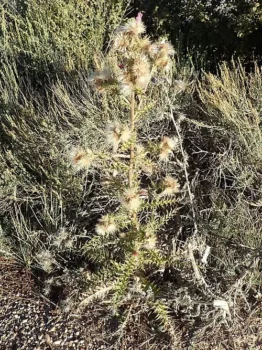
Rothrock’s Thistle: A Rare Native Worth Protecting
Meet Rothrock’s thistle (Cirsium rothrockii), a lesser-known native wildflower that calls the high country of the American Southwest home. While thistles often get a bad rap in gardening circles, this particular species deserves our attention—and perhaps our protection.
A True Native with Limited Range
Rothrock’s thistle is a proud native of the United States, specifically found in Arizona and Utah. This biennial forb has carved out its niche in these southwestern landscapes, though it’s not exactly what you’d call widespread. As a forb, it’s an herbaceous plant that lacks the woody stems of shrubs and trees, putting all its energy into producing those characteristic thistle blooms.
- Species observed
- No observations
Conservation Concerns: Handle with Care
Here’s where things get a bit serious: Rothrock’s thistle carries a Global Conservation Status of S3?, which essentially means we’re not entirely sure, but it might be vulnerable. This uncertain status is a red flag that suggests this plant could be facing some challenges in the wild.
If you’re considering adding this native beauty to your garden, proceed with caution and responsibility. Only source plants or seeds from reputable native plant nurseries that can verify their material wasn’t collected from wild populations. Better yet, consider supporting conservation efforts rather than cultivation until we know more about this species’ status.
What to Expect from This Biennial Beauty
As a biennial, Rothrock’s thistle takes a two-year approach to life. In its first year, it’ll focus on establishing a strong root system and producing a rosette of leaves. The real show happens in year two, when it sends up flowering stems and produces seeds before completing its life cycle.
Like most thistles, this species likely produces spiny flower heads that, despite their prickly appearance, can be quite attractive to pollinators. Native bees, butterflies, and other beneficial insects often find thistle flowers irresistible.
Growing Conditions and Care
While specific growing requirements for Rothrock’s thistle are not well-documented, we can make some educated guesses based on its native habitat and its thistle relatives:
- Likely prefers well-draining soils
- Probably tolerates drought conditions once established
- May need full sun to partial shade
- Could require cooler temperatures given its high-elevation native range
- As a biennial, expect a two-year growing cycle
Garden Role and Landscape Use
If you do choose to grow Rothrock’s thistle responsibly, it could serve several purposes in a native landscape:
- Wildlife habitat and pollinator support
- Authentic representation of southwestern high-country flora
- Educational value for native plant enthusiasts
- Potential seed source for conservation efforts (with proper permits)
The Bottom Line
Rothrock’s thistle represents one of those fascinating native plants that reminds us how much we still don’t know about our local flora. While its conservation status remains unclear, that uncertainty itself is reason enough to treat this species with respect.
For most gardeners, supporting this plant might be better accomplished through habitat conservation and supporting research rather than home cultivation. If you’re drawn to native thistles for your garden, consider working with local native plant societies to identify other thistle species that are more common and better understood.
Sometimes the best way to love a plant is to admire it from afar and work to protect the wild spaces where it naturally thrives.