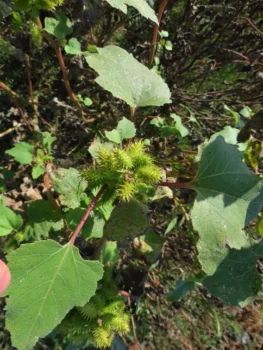
Rough Cocklebur: Why This Native Plant Probably Isn’t Right for Your Garden
When it comes to native plants, we garden enthusiasts often get excited about adding indigenous species to our landscapes. But here’s the thing about rough cocklebur (Xanthium strumarium) – just because it’s native doesn’t mean you want it taking over your backyard. This annual forb might have deep North American roots, but it’s got a reputation that would make even the most dedicated native plant gardener think twice.
What Is Rough Cocklebur?
Rough cocklebur is an annual forb – essentially a non-woody plant that completes its entire life cycle in one growing season. As a vascular plant without significant woody tissue, it lacks the permanent structure of shrubs and trees, instead producing new growth from buds at or below ground level each year.
Don’t let its humble forb classification fool you, though. This plant has earned its common name through its distinctive, spiny seed pods (called burs) that seem designed by nature to hitch a ride on anything that brushes past them – including your socks, your pet’s fur, and your gardening gloves.
Where Does Rough Cocklebur Call Home?
Here’s where things get interesting from a native plant perspective. Rough cocklebur is actually native to an impressively large swath of North America, including Canada, the lower 48 states, Puerto Rico, and the U.S. Virgin Islands. You can find it growing naturally across virtually the entire continent, from Alberta to Alabama, from British Columbia to the Bahamas.
- Species observed
- No observations
However, it’s also become established in places like Hawaii and other Pacific Basin locations where it’s considered non-native but naturalized.
The Not-So-Pretty Truth About Its Appearance
Let’s be honest – rough cocklebur won’t be winning any beauty contests in the plant world. This coarse annual produces inconspicuous green flowers that you’d probably walk right past without noticing. The real showstopper (and not in a good way) comes later in the season when those infamous spiny burs develop. These egg-shaped seed cases are covered in hooked spines that grab onto anything and everything, making them nature’s version of velcro – but way more annoying.
Growing Conditions: Where It Thrives (Whether You Want It To or Not)
Rough cocklebur has earned its place as a successful native plant through sheer adaptability. It’s remarkably tolerant of various growing conditions:
- Thrives in disturbed soils and waste areas
- Tolerates poor, compacted soils
- Handles drought conditions well
- Grows happily in full sun to partial shade
- Shows facultative wetland status, meaning it can grow in both wet and dry conditions
This adaptability is exactly why it shows up uninvited in so many places – roadsides, vacant lots, agricultural edges, and yes, sometimes gardens.
Why Most Gardeners Should Skip This One
While we’re big fans of native plants here, rough cocklebur falls into that category of natives that are better appreciated from a distance. Here’s why:
- Those burs are seriously annoying: They stick to everything and can be painful to remove from skin or clothing
- Aggressive self-seeding: Once established, it tends to spread and can become weedy
- Limited ornamental value: It’s just not particularly attractive in a garden setting
- Minimal wildlife benefits: While native, it offers limited benefits to pollinators since it’s wind-pollinated
Better Native Alternatives for Your Garden
If you’re looking to add native annual forbs to your landscape, consider these more garden-friendly options instead:
- Wild bergamot (Monarda species) for pollinator gardens
- Black-eyed Susan (Rudbeckia species) for bright, cheerful flowers
- Native sunflowers (Helianthus species) for height and wildlife value
- Wild lupines (Lupinus species) for nitrogen-fixing benefits
If You Do Encounter Rough Cocklebur
Since this plant shows up on its own quite readily, you’re more likely to be dealing with removing it than planting it. If you find rough cocklebur growing in areas where you don’t want it, the best approach is to remove plants before they set seed. Those burs can remain viable for years, so prevention is key.
Remember to wear gloves and long sleeves when handling mature plants – those spines aren’t just for show!
The Bottom Line
Rough cocklebur serves as a good reminder that native doesn’t always mean garden-appropriate. While this hardy annual has earned its place in North American ecosystems through impressive adaptability and persistence, most home gardeners will be happier choosing native plants that offer beauty, wildlife benefits, and good garden manners. Save your garden space for natives that truly deserve a place in your landscape design – your future self (and your socks) will thank you!