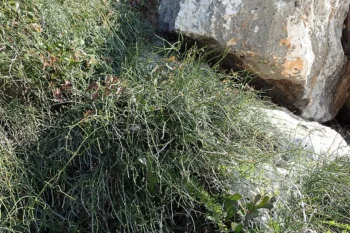
Rough Jointfir: A Unique Native Shrub for Water-Wise Gardens
If you’re looking for a conversation starter in your drought-tolerant garden, meet the rough jointfir (Ephedra aspera). This fascinating native shrub might not win any beauty contests in the traditional sense, but it brings something special to southwestern landscapes that most gardeners have never experienced.
What Makes Rough Jointfir Special
Rough jointfir is a perennial shrub that’s perfectly adapted to life in the American Southwest. As a member of the gymnosperm family (think pine trees, but much smaller), it’s actually more closely related to conifers than to typical garden shrubs. Instead of broad leaves, it sports jointed green stems that do most of the photosynthesis work – a clever adaptation for conserving water in harsh desert conditions.
This multi-stemmed woody plant typically stays under 13-16 feet tall, making it a manageable size for most home landscapes. You might also see it listed under several botanical synonyms, including Ephedra clokeyi, Ephedra fasciculata, or Ephedra nevadensis var. aspera, but they’re all referring to the same unique plant.
Where Rough Jointfir Calls Home
Rough jointfir is native to six southwestern states: Arizona, California, Nevada, New Mexico, Texas, and Utah. It’s perfectly at home in the lower 48 states and has been thriving in these arid regions long before any of us started thinking about water-wise gardening.
- Species observed
- No observations
Why Consider Rough Jointfir for Your Garden
Here’s where this plant really shines – it’s the ultimate low-maintenance companion for gardeners who want something different. The rough jointfir offers:
- Exceptional drought tolerance once established
- Unique architectural interest with its jointed stem structure
- Year-round green color in desert landscapes
- Minimal care requirements
- Perfect for xeriscaping and rock gardens
However, it’s worth noting that rough jointfir has a Global Conservation Status of S3?, indicating some uncertainty about its population status. If you decide to plant it, make sure you source it responsibly from reputable native plant nurseries rather than collecting from wild populations.
Growing Rough Jointfir Successfully
The beauty of rough jointfir lies in its simplicity. This plant thrives in USDA hardiness zones 7-10 and asks for very little once you understand its preferences:
Ideal Growing Conditions
- Sun: Full sun is essential – this plant loves intense sunlight
- Soil: Well-draining soil is crucial; it tolerates poor, rocky soils better than rich, amended ones
- Water: Low water requirements once established; overwatering is more harmful than underwatering
Planting and Care Tips
Plant your rough jointfir in fall or early spring when temperatures are moderate. Choose a location with excellent drainage – if water pools after rain, pick a different spot or create a raised planting area.
During the first year, provide occasional deep watering to help establish the root system, but once established, natural rainfall should be sufficient in most areas. The key is to resist the urge to pamper this plant – it’s built for tough conditions and actually performs better with benign neglect.
Design Ideas and Landscape Role
Rough jointfir works beautifully as a specimen plant where its unique form can be appreciated up close. It’s perfect for:
- Desert and xeriscape gardens
- Rock gardens and succulent displays
- Modern, minimalist landscape designs
- Areas where you want textural interest without high water needs
While rough jointfir is wind-pollinated and doesn’t offer the same direct benefits to pollinators as flowering plants, it can provide shelter and nesting sites for small wildlife in appropriate settings.
Is Rough Jointfir Right for Your Garden?
Rough jointfir isn’t for everyone, and that’s perfectly okay. It’s best suited for gardeners who appreciate unusual plants, live in appropriate climate zones, and want to embrace water-wise gardening principles. If you’re expecting showy flowers or lush foliage, you might want to look elsewhere.
However, if you’re drawn to plants with interesting stories, love the idea of growing something most of your neighbors have never heard of, and want to support native plant communities, rough jointfir could be exactly what your landscape needs. Just remember to source it responsibly and give it the well-draining, sunny conditions it craves.