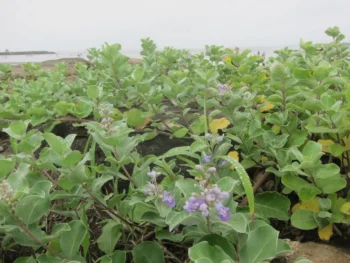
Roundleaf Chastetree: A Beautiful But Problematic Coastal Plant
If you’ve been browsing coastal plants and stumbled across the roundleaf chastetree (Vitex rotundifolia), you might be tempted by its salt tolerance and charming appearance. But before you add this shrub to your shopping cart, there’s some important information you need to know about this complex plant.
What Is Roundleaf Chastetree?
Roundleaf chastetree is a perennial shrub that typically grows as a multi-stemmed woody plant, usually staying under 13-16 feet tall. Despite its common name, it’s quite different from other chastetrees you might know. This plant has earned its name from its distinctive rounded leaves and its relation to the Vitex family.
You might also encounter this plant under its botanical synonyms, including Vitex ovata or Vitex trifolia var. simplicifolia, so keep an eye out for these names as well.
Native Status and Geographic Distribution
Here’s where things get complicated. Roundleaf chastetree is native to Hawaii, where it naturally belongs in coastal ecosystems. However, in the continental United States, it’s a completely different story. This plant has been introduced to states like South Carolina and has established itself as a non-native species that reproduces on its own in the wild.
- Species observed
- No observations
The Invasive Problem
Warning: This plant is considered invasive in multiple states. Before you even think about planting roundleaf chastetree, you need to know that it has serious invasive tendencies:
- Classified as Category 2 invasive in Alabama
- Listed as prohibited in some states
- Designated as invasive in various regions
- Spreads aggressively without human intervention
When a plant is labeled invasive, it means it can outcompete native species, disrupt local ecosystems, and cause ecological harm. That’s exactly what’s happening with roundleaf chastetree in areas where it doesn’t belong.
Why Gardeners Might Be Tempted
It’s not hard to see why some gardeners might be drawn to this plant. Roundleaf chastetree offers several appealing characteristics:
- Excellent salt tolerance for coastal areas
- Drought-resistant once established
- Small, fragrant flowers that attract pollinators like bees and butterflies
- Thrives in sandy soils
- Low maintenance requirements
- Suitable for USDA hardiness zones 9-11
Our Strong Recommendation: Don’t Plant It
Despite its attractive qualities, we strongly advise against planting roundleaf chastetree in your garden if you’re in the continental United States. The ecological risks far outweigh any landscaping benefits. When you plant an invasive species, you’re potentially contributing to environmental damage that can persist for generations.
Better Native Alternatives
Instead of risking ecological harm, consider these native alternatives that can provide similar benefits:
- For coastal areas: Beach sunflower (Helianthus debilis) or sea oats (Uniola paniculata)
- For salt tolerance: Saltgrass (Distichlis spicata) or seaside goldenrod (Solidago sempervirens)
- For drought tolerance: Native salvias or penstemons appropriate to your region
- For pollinator benefits: Local native wildflowers and shrubs
If You Already Have It
If roundleaf chastetree is already established in your landscape, consider removing it responsibly. Contact your local extension office or invasive species management program for guidance on proper removal and disposal methods. They can also help you identify appropriate native replacements.
The Bottom Line
While roundleaf chastetree might seem like an easy-care, attractive option for coastal or dry gardens, its invasive nature makes it a poor choice for responsible gardening. By choosing native alternatives instead, you’ll create a beautiful landscape that supports local ecosystems rather than threatening them. Your garden can be both gorgeous and environmentally responsible – it just takes making informed choices about what you plant.