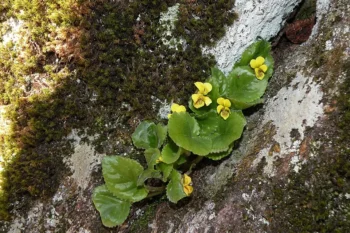
Roundleaf Yellow Violet: A Charming Native Groundcover for Shady Gardens
If you’re searching for a delightful native groundcover that thrives in shade and brings cheerful spring color to your garden, the roundleaf yellow violet (Viola rotundifolia) might just be your new best friend. This charming perennial forb is one of those unsung heroes of the woodland garden – small in stature but big on personality.
What Makes Roundleaf Yellow Violet Special?
The roundleaf yellow violet stands out from its violet cousins with its distinctive heart-shaped to rounded leaves and bright yellow flowers that appear in spring. Unlike many other violets that sport purple or blue blooms, this little beauty brings sunshine to shady spots where few other flowers dare to bloom.
As a native North American perennial, this plant has been quietly carpeting forest floors and woodland edges for centuries. It’s perfectly adapted to life in the understory, making it an excellent choice for gardeners looking to create authentic native plant communities.
Where Does It Call Home?
This versatile native has quite an impressive range across eastern North America. You’ll find roundleaf yellow violet growing naturally from southeastern Canada down through the eastern United States, including Ontario, Quebec, and states from Maine to Georgia, and west to Ohio, Kentucky, and Tennessee. It’s truly a plant that knows how to make itself at home across diverse climates and conditions.
- Species observed
- No observations
Why Consider Adding It to Your Garden?
There are several compelling reasons why roundleaf yellow violet deserves a spot in your landscape:
- Shade tolerance: Thrives in partial to full shade where many other flowering plants struggle
- Low maintenance: Once established, it requires minimal care and attention
- Pollinator support: Attracts small native bees, flies, and serves as a host plant for beautiful fritillary butterfly caterpillars
- Adaptable moisture needs: Can handle both moist and moderately dry conditions
- Natural groundcover: Spreads gently to form attractive colonies without becoming aggressive
Perfect Garden Partnerships
Roundleaf yellow violet is a natural fit for woodland gardens, shade gardens, and native plant landscapes. It pairs beautifully with other shade-loving natives like wild ginger, mayapple, and trilliums. Consider using it as a groundcover beneath trees or in those tricky spots where grass refuses to grow.
This little violet also has a facultative wetland status across its range, meaning it’s equally happy in both wetland and upland conditions. This flexibility makes it a great choice for rain gardens, bioswales, or areas with variable moisture levels.
Growing Conditions and Care
One of the best things about roundleaf yellow violet is how accommodating it can be. Here’s what it needs to thrive:
- Light: Partial to full shade (morning sun is fine, but avoid hot afternoon sun)
- Soil: Adaptable to various soil types, from moist to moderately dry
- Hardiness: Cold hardy in USDA zones 3-8
- Water: Moderate moisture, but tolerates some drought once established
Planting and Establishment Tips
Getting your roundleaf yellow violet off to a good start is relatively straightforward:
- Plant in spring or fall when temperatures are moderate
- Space plants about 6-12 inches apart if you want quicker coverage
- Water regularly during the first growing season to help establish roots
- Mulch lightly around plants to retain moisture and suppress weeds
- Be patient – like many natives, it may take a year or two to really settle in
Once established, roundleaf yellow violet will spread naturally through underground rhizomes and may also self-seed. This gentle spreading habit helps it form those lovely natural colonies you see in the wild.
A Small Plant with Big Impact
While roundleaf yellow violet may not be the showiest plant in your garden, it offers something precious: authentic native beauty that supports local ecosystems. Its cheerful spring flowers provide early nectar for emerging pollinators, while its foliage serves as food for butterfly caterpillars throughout the growing season.
For gardeners committed to creating landscapes that are both beautiful and ecologically meaningful, the roundleaf yellow violet represents exactly the kind of understated elegance that makes native gardening so rewarding. Sometimes the smallest plants make the biggest difference – and this little violet is proof of that garden wisdom.