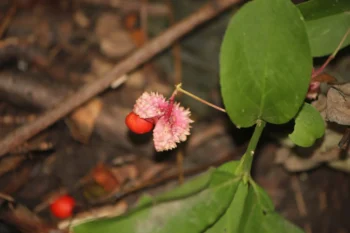
Running Strawberry Bush: A Hidden Gem for Shade Gardens
If you’re looking for a low-maintenance native shrub that brings subtle beauty to shady spots, let me introduce you to the running strawberry bush (Euonymus obovatus). Don’t let the name fool you – this charming little plant isn’t related to strawberries at all, but it’s got its own special appeal that makes it worth considering for your native garden.
What Is Running Strawberry Bush?
Running strawberry bush is a small, deciduous shrub that’s native to eastern North America. As a perennial woody plant, it typically stays under 4-5 feet tall and spreads slowly by underground stems, making it an excellent groundcover option. The running part of its name refers to this spreading habit, which helps it form colonies over time.
Where Does It Grow Naturally?
This native beauty calls both Canada and the lower 48 states home, with populations scattered across Arkansas, Ontario, Georgia, Illinois, Indiana, Kentucky, Michigan, Missouri, New York, North Carolina, Ohio, Pennsylvania, and Tennessee. It’s adapted to a wide range of eastern North American climates and conditions.
- Species observed
- No observations
Why Consider Planting Running Strawberry Bush?
Here’s what makes this understated shrub special:
- Native credentials: Supporting local ecosystems by choosing native plants
- Seasonal interest: Small greenish flowers in spring give way to attractive pink-red seed capsules that split open to reveal bright orange seeds
- Fall color: Leaves transform into lovely shades of orange-red to purple
- Wildlife value: Provides habitat and food sources for native insects and small wildlife
- Low maintenance: Once established, it’s quite self-sufficient
Garden Design Ideas
Running strawberry bush shines in:
- Woodland gardens as understory plantings
- Native plant landscapes
- Naturalized areas where you want gentle groundcover
- Shade gardens that need subtle texture and seasonal interest
Growing Conditions and Care
The good news is that running strawberry bush isn’t particularly fussy about its growing conditions. Based on its wetland status across different regions, it’s quite adaptable – it usually prefers non-wetland sites but can handle some moisture variation.
Ideal conditions include:
- Partial to full shade (perfect for those tricky shady spots!)
- Moist, well-draining soil
- USDA hardiness zones 4-8
- Various soil types – it’s not too picky
Planting and Care Tips
Getting started with running strawberry bush is straightforward:
- Plant in spring or fall for best establishment
- Water regularly during the first growing season
- Once established, it’s quite drought-tolerant
- Minimal pruning needed – just remove any dead or damaged stems
- Allow space for its spreading habit if you want it to naturalize
A Note About Responsible Sourcing
In Arkansas, running strawberry bush has a rarity status of S3, meaning it’s uncommon in that state. If you’re gardening in Arkansas or purchasing plants, make sure you’re buying from reputable native plant nurseries that use responsibly sourced material rather than wild-collected plants.
Is Running Strawberry Bush Right for Your Garden?
This native shrub is perfect if you’re looking for a low-key addition to your shade garden that supports local wildlife without demanding much attention. While it won’t provide the showstopping blooms of some garden favorites, its subtle charm and ecological benefits make it a worthy addition to native plant enthusiasts’ collections.
Consider running strawberry bush if you want to add gentle texture and seasonal interest to woodland areas, create natural-looking groundcover, or simply support your local ecosystem with beautiful native plants.