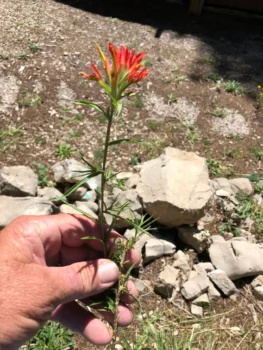
Sacramento Mountain Indian Paintbrush: A Rare Southwestern Treasure
Meet the Sacramento Mountain Indian paintbrush (Castilleja wootonii), one of the Southwest’s most elusive wildflower gems. This stunning perennial forb paints the high-elevation landscapes of New Mexico and Texas with brilliant splashes of red-orange color, but don’t start planning your garden around it just yet – there’s more to this beauty than meets the eye.
A Plant with Limited Real Estate
Sacramento Mountain Indian paintbrush is native to a very specific slice of the American Southwest, calling only New Mexico and Texas home. This isn’t a plant that gets around much – it’s what botanists call endemic, meaning it’s found nowhere else on Earth. You’ll discover it nestled in the high-elevation areas of the Sacramento Mountains, where it has adapted to a very particular set of environmental conditions.
- Species observed
- No observations
What Makes It Special
Like other members of the Castilleja family, this paintbrush doesn’t mess around when it comes to making a statement. The plant produces vibrant red-orange bracts (those are modified leaves, not actual flowers) that look exactly like someone dipped a paintbrush in bright paint. These colorful displays typically appear atop stems that emerge from a perennial root system, creating eye-catching patches of color against the mountain backdrop.
As a forb – essentially a non-woody flowering plant – Sacramento Mountain Indian paintbrush grows close to the ground without developing the thick, woody stems you’d see on shrubs or trees. It’s built for survival in harsh mountain conditions rather than impressive height.
Why You Probably Shouldn’t Plant It
Here’s where things get serious: Sacramento Mountain Indian paintbrush carries a Global Conservation Status of S1Q, meaning it’s critically imperiled with some uncertainty about its exact status. In simple terms, this plant is rare – really rare. Wild populations are small and vulnerable, making every individual plant precious for the species’ survival.
Beyond its rarity status, this paintbrush presents some serious cultivation challenges:
- It’s often hemiparasitic, meaning it attaches to the roots of other plants to survive
- It requires very specific high-elevation growing conditions that are difficult to replicate
- It has proven notoriously difficult to grow in cultivation
- Seeds and plants should never be collected from wild populations
Conservation Over Cultivation
Instead of trying to grow Sacramento Mountain Indian paintbrush, consider supporting its conservation by:
- Respecting its natural habitat if you encounter it in the wild
- Supporting organizations that protect high-elevation ecosystems
- Choosing more common native alternatives for your garden
Better Alternatives for Your Garden
If you’re drawn to the stunning beauty of Indian paintbrush, consider these more garden-friendly native alternatives:
- Desert Indian paintbrush (Castilleja chromosa) – more widely available and adaptable
- Scarlet Indian paintbrush (Castilleja coccinea) – annual species good for wildflower mixes
- Giant red paintbrush (Castilleja miniata) – slightly more tolerant of cultivation
The Bigger Picture
Sacramento Mountain Indian paintbrush serves as a perfect reminder that not every beautiful native plant belongs in our gardens. Sometimes the most loving thing we can do for a species is admire it from a distance and work to protect its natural habitat. This rare gem has carved out its niche in the Sacramento Mountains over thousands of years – let’s make sure it stays there for future generations to discover and appreciate.
When we choose common native plants over rare ones for our gardens, we’re making a conservation-minded decision that supports biodiversity while still creating beautiful, wildlife-friendly landscapes. That’s a win-win in anyone’s book.