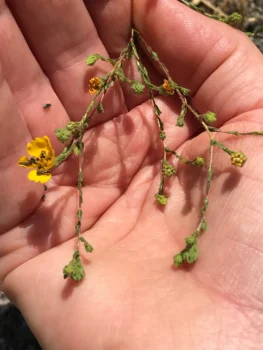
Salinas River Tarweed: A Rare California Native Worth Preserving
If you’re passionate about California native plants and conservation gardening, you might want to learn about Salinas River tarweed (Deinandra pentactis). This little-known annual wildflower is a true California endemic with a story that’s both fascinating and concerning for native plant enthusiasts.
What Makes Salinas River Tarweed Special
Salinas River tarweed is a charming annual forb that belongs to the sunflower family. Unlike its woody cousins, this herbaceous plant completes its entire life cycle in a single growing season, emerging fresh each year from seed. You might also encounter it listed under its former scientific name, Hemizonia pentactis, in older gardening references.
What sets this plant apart isn’t just its sunny yellow composite flowers that brighten the late summer and fall landscape—it’s its incredibly limited native range and conservation status.
Where Does It Call Home?
This specialized wildflower is endemic to California, with its heart centered around the Salinas River valley and surrounding areas in Monterey County. Its extremely limited geographic distribution makes it a true California treasure that exists nowhere else on Earth.
- Species observed
- No observations
A Conservation Concern
Here’s where things get serious: Salinas River tarweed has a Global Conservation Status of S2S3, meaning it’s considered rare to uncommon throughout its range. This conservation status should give any responsible gardener pause and consideration.
If you’re thinking about growing this plant, it’s crucial to source seeds or plants only from reputable native plant societies, botanical gardens, or conservation organizations that practice responsible collecting and propagation. Never collect seeds or plants from wild populations.
Garden Appeal and Growing Conditions
When grown responsibly, Salinas River tarweed can be a delightful addition to specialized native California gardens. Here’s what you can expect:
- Flowers: Small, bright yellow composite blooms that appear in late summer through fall
- Growth habit: Annual forb that grows as a non-woody herbaceous plant
- Climate needs: Thrives in USDA zones 9-10, adapted to California’s Mediterranean climate
- Sun requirements: Prefers full sun exposure
- Soil preferences: Well-drained soils, tolerant of various soil types once established
Pollinator and Wildlife Benefits
Like many members of the sunflower family, Salinas River tarweed provides valuable nectar and pollen for native California bees, butterflies, and other beneficial insects. Its late-season blooming period makes it particularly valuable when many other wildflowers have finished their show.
How to Grow Salinas River Tarweed Responsibly
If you’ve obtained seeds from a legitimate conservation source, here’s how to give them the best chance of success:
- Timing: Direct seed in fall to allow for natural winter stratification
- Location: Choose a sunny spot with good drainage
- Watering: Provide minimal supplemental water after establishment—this plant is adapted to California’s dry summers
- Maintenance: Allow plants to self-seed for natural succession
- Garden style: Best suited for wildflower meadows, naturalized areas, or specialized native plant gardens
Should You Grow It?
The answer depends on your commitment to conservation and access to responsibly sourced material. This isn’t a plant for casual gardeners or those looking for easy-to-find garden center options. However, for dedicated native plant enthusiasts working with conservation organizations, growing Salinas River tarweed can be part of important preservation efforts.
If you can’t source this rare plant responsibly, consider other California native tarweeds or sunflower family members that are more common and readily available. Your local native plant society can suggest beautiful alternatives that will provide similar ecological benefits without conservation concerns.
Remember, every rare plant we help preserve through responsible cultivation is a small victory for California’s incredible botanical heritage. Just make sure you’re part of the solution, not part of the problem.