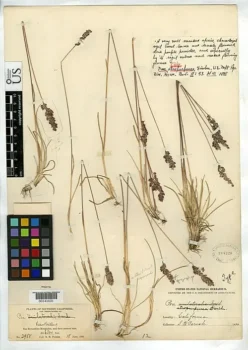
San Bernardino Bluegrass: A Rare California Mountain Treasure
Meet San Bernardino bluegrass (Poa atropurpurea), one of California’s most endangered native grasses. This remarkable perennial species represents both the beauty and fragility of our mountain ecosystems, making it a plant that deserves our attention and protection.
A Grass Worth Knowing About
San Bernardino bluegrass is a fine-textured perennial bunchgrass that forms elegant clumps with distinctive blue-green to purplish foliage. As a member of the grass family (Poaceae), it may not have showy flowers, but its subtle beauty and ecological importance make it truly special.
Where Does It Call Home?
This rare grass is endemic to California, with its heart in the San Bernardino Mountains region. Its natural habitat consists of moist mountain meadows and wetland edges at higher elevations, where it has adapted to the unique conditions of Southern California’s sky islands.
- Species observed
- No observations
Why This Grass Matters (And Why You Should Care)
Important Conservation Alert: San Bernardino bluegrass carries an Endangered status with a Global Conservation Status of S2 (Imperiled). This means there are typically only 6 to 20 occurrences remaining, making it extremely vulnerable to extinction.
If you’re considering growing this species, here’s what you need to know:
- Only obtain plants or seeds from reputable, licensed native plant nurseries
- Never collect from wild populations
- Consider this plant only if you can provide appropriate mountain wetland conditions
- Support conservation efforts by learning about and protecting its natural habitat
Growing Conditions and Care
San Bernardino bluegrass has very specific needs that reflect its mountain wetland origins:
- Water: Consistent moisture to wet conditions (classified as Facultative Wetland)
- Climate: Cool mountain conditions, USDA zones 8-10
- Soil: Moist to saturated soils typical of mountain meadows
- Elevation: Higher elevation sites that mimic its native mountain habitat
Garden Role and Landscape Use
This isn’t your typical lawn grass! San Bernardino bluegrass works best in:
- Native California plant collections
- Restoration projects in appropriate habitats
- Specialized wetland gardens
- Educational or conservation-focused landscapes
Its fine texture and subtle coloring make it an excellent choice for naturalistic plantings where you want to recreate the look of California’s mountain meadows.
Wildlife and Ecological Benefits
While specific wildlife benefits aren’t well-documented for this rare species, native grasses typically provide:
- Seeds for birds and small mammals
- Nesting material and cover for wildlife
- Habitat structure in wetland ecosystems
- Soil stabilization in sensitive mountain areas
The Bottom Line
San Bernardino bluegrass represents both an opportunity and a responsibility. While most gardeners should focus on other native California grasses that are more readily available and easier to grow, those with the right conditions and commitment to conservation can play a role in preserving this endangered species.
If you’re inspired by this rare grass but can’t provide its specialized needs, consider other beautiful California native grasses like purple needlegrass (Stipa pulchra) or red fescue (Festuca rubra) that offer similar aesthetic appeal with greater availability and easier cultivation.
Remember: every rare plant saved is a victory for biodiversity. Whether you grow San Bernardino bluegrass or simply learn about it, you’re contributing to the important work of preserving California’s unique natural heritage.