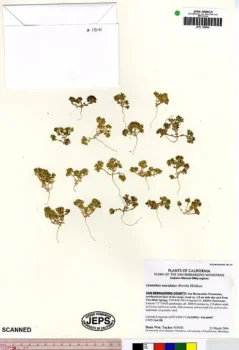
San Bernardino Mountain Gilia: A Rare California Native Worth Protecting
If you’re passionate about native California plants and conservation gardening, you might be intrigued by the San Bernardino Mountain gilia (Linanthus maculatus). This delicate annual wildflower is a true California treasure, but it comes with some important considerations that every responsible gardener should know about.
What Makes This Plant Special
San Bernardino Mountain gilia is a charming little forb – essentially a non-woody flowering plant – that belongs to the phlox family. As an annual, it completes its entire life cycle in one growing season, producing delicate flowers that typically bloom in spring before setting seed and dying back.
Don’t let its humble appearance fool you. This petite wildflower represents something much larger: California’s incredible plant diversity and the importance of preserving our native flora. You might also see it referenced by its botanical synonym, Gilia maculata Parish, in older gardening references.
A True California Endemic
This special plant is native to the lower 48 states, but its distribution is remarkably limited – it grows naturally only in California, specifically in the San Bernardino Mountains region. This makes it what botanists call an endemic species, meaning it exists nowhere else on Earth naturally.
- Species observed
- No observations
Important Conservation Status
Here’s what every gardener needs to know: San Bernardino Mountain gilia has a Global Conservation Status of S2, which means it’s considered Imperiled. This classification indicates the species faces extreme rarity or specific factors that make it especially vulnerable to disappearing forever. Typically, this means there are only 6 to 20 known populations remaining, with perhaps 1,000 to 3,000 individual plants left in the wild.
This rarity status is crucial information for anyone considering growing this plant. While we absolutely encourage supporting native species, it must be done responsibly.
Should You Grow San Bernardino Mountain Gilia?
The short answer is: only if you can source it responsibly. Here’s what that means:
- Never collect seeds or plants from wild populations
- Only purchase from reputable native plant nurseries that propagate from legally obtained, ethically sourced material
- Consider it for specialized native plant collections or conservation gardens
- Be prepared that finding seeds or plants may be challenging due to its rarity
If you can source it responsibly, this plant could be a wonderful addition to native California gardens, particularly those focused on preserving rare species or creating authentic San Bernardino Mountains habitat.
Garden Applications and Design Ideas
When responsibly sourced, San Bernardino Mountain gilia works well in:
- Native wildflower gardens focusing on California endemics
- Rock gardens that mimic mountain conditions
- Conservation-focused landscapes
- Educational gardens that showcase rare species
As a small annual forb, it’s best used in areas where its delicate beauty can be appreciated up close, rather than as a mass planting for dramatic impact.
Growing Conditions and Care
While specific cultivation information for this rare species is limited, we can make educated assumptions based on its native habitat in the San Bernardino Mountains:
- Likely prefers well-draining, sandy or rocky soils
- Probably thrives in full sun to partial shade
- As a mountain species, it may prefer cooler conditions than typical Southern California lowland plants
- Being an annual, it will need to reseed each year to maintain a population
The Bigger Picture
Growing rare native plants like San Bernardino Mountain gilia is about more than just adding something unique to your garden. It’s about participating in conservation efforts, supporting biodiversity, and helping ensure that future generations can enjoy California’s natural heritage.
If you can’t find responsibly sourced San Bernardino Mountain gilia, consider supporting conservation by growing other rare or threatened California natives that are more readily available from ethical sources. Every native plant we grow in our gardens helps support local ecosystems and pollinator populations.
Remember: the best way to help rare plants is often to support their natural habitats and the organizations working to protect them. Consider this beautiful little wildflower a reminder of how precious and fragile our native plant communities truly are.