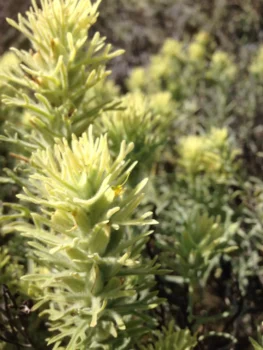
San Clemente Island Indian Paintbrush: A Rare Gem for Conservation-Minded Gardeners
If you’re passionate about rare California native plants and conservation gardening, you might have heard whispers about the San Clemente Island Indian paintbrush (Castilleja grisea). This remarkable little perennial is as special as it is beautiful – and as challenging to grow as it is rewarding to preserve.
What Makes This Plant So Special?
The San Clemente Island Indian paintbrush isn’t just another pretty wildflower. This native California perennial herb belongs to an exclusive club – it’s found nowhere else in the world except San Clemente Island, one of California’s Channel Islands. With its distinctive paintbrush-like flower spikes glowing in shades of red, orange, and yellow, this 1-3 foot tall beauty is a living piece of California’s natural heritage.
As a member of the Indian paintbrush family, this plant has narrow, grayish-green leaves that give it its species name grisea, meaning gray. The flowers, arranged in those characteristic brush-like clusters, create a stunning display that’s perfectly adapted to attract its primary pollinators.
Where Does It Come From?
This rare gem calls San Clemente Island, California, its only home. The island sits about 68 miles off the coast of San Diego, and this paintbrush has evolved specifically to thrive in that unique island environment.
- Species observed
- No observations
A Conservation Alert: Handle with Care
Important: Before you get too excited about adding this beauty to your garden, there’s something crucial you need to know. The San Clemente Island Indian paintbrush has a Global Conservation Status of S3 (Vulnerable) and is listed as Threatened in the United States. This means it’s at risk of disappearing forever.
If you’re determined to grow this rare species, please only source plants or seeds from reputable native plant nurseries that practice ethical collection methods. Never collect from wild populations – every plant in the wild is precious for the species’ survival.
Why Gardeners Love (and Struggle with) Indian Paintbrush
Here’s where things get interesting – and a bit challenging. Like many Castilleja species, this paintbrush is what botanists call a hemiparasite. Don’t worry, it’s not as scary as it sounds! It simply means the plant can photosynthesize on its own but also taps into the roots of nearby plants for extra nutrients. Think of it as nature’s version of sharing a meal with neighbors.
This unique trait makes Indian paintbrush both fascinating and tricky to grow. In the wild, it often partners with grasses and other plants, creating beautiful natural communities.
Pollinator Paradise
If you can successfully grow this rare beauty, you’ll be rewarded with a pollinator magnet. The tubular flowers are perfectly designed to attract hummingbirds, which love to hover and sip nectar from those colorful brush-like blooms. Native bees also find these flowers irresistible, making this plant a valuable addition to any pollinator garden.
Growing Conditions and Care
Given its island origins, the San Clemente Island Indian paintbrush has some specific preferences:
- Sunlight: Full sun to partial shade
- Soil: Excellent drainage is absolutely critical – think rocky, sandy, or gravelly soils
- Water: Drought-tolerant once established; prefers minimal summer water
- Climate: Best suited for USDA zones 9-11, particularly coastal California conditions
- Companions: May benefit from being planted near grasses or other compatible native plants
Garden Design Ideas
This rare paintbrush works beautifully in:
- Rock gardens with excellent drainage
- Mediterranean-style landscapes
- Specialized native plant collections
- Conservation gardens dedicated to rare species
- Pollinator gardens in suitable climates
Planting and Care Tips
Growing this species successfully requires patience and attention to detail:
- Ensure perfect drainage – this cannot be overstated
- Plant in fall for best establishment
- Water moderately the first year, then reduce significantly
- Consider companion planting with native grasses
- Avoid fertilizers – these plants prefer lean soils
- Be patient – establishment can be slow
The Bottom Line
The San Clemente Island Indian paintbrush is not a plant for casual gardeners or beginners. It’s a species for conservation-minded enthusiasts who understand the responsibility that comes with growing rare plants. If you’re up for the challenge and can source it ethically, this remarkable paintbrush offers the opportunity to participate in preserving one of California’s most unique native plants while creating habitat for pollinators.
Remember, every garden that successfully grows rare native species becomes a small sanctuary – a living library of our natural heritage. Just make sure you’re ready for the commitment this special plant deserves.