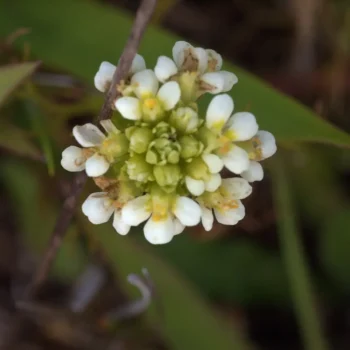
San Francisco Owl’s-Clover: A Rare Bay Area Native Worth Protecting
If you’re passionate about California native plants and conservation, San Francisco owl’s-clover (Triphysaria floribunda) might just capture your heart. This petite annual wildflower is as rare as it is beautiful, making it a special addition for dedicated native plant gardeners who want to support local biodiversity.
What Makes San Francisco Owl’s-Clover Special?
San Francisco owl’s-clover is a true California endemic, meaning it exists nowhere else in the world except in a few precious locations around the San Francisco Bay Area. This little forb (that’s botanist-speak for a non-woody flowering plant) produces charming tubular flowers that typically bloom in shades of purple and pink during the spring months.
As an annual plant, it completes its entire life cycle in one growing season, sprouting from seed, flowering, setting seed, and dying back as the California dry season approaches. Don’t let its small stature fool you—this plant plays an important role in its native ecosystem.
Where Does It Naturally Grow?
This rare wildflower is found exclusively in California, with its distribution centered around the San Francisco Bay Area. It has a particular affinity for serpentine soils—those unique, mineral-rich soils that many plants can’t tolerate but that host some of California’s most interesting endemic species.
- Species observed
- No observations
A Plant in Need: Understanding Its Rarity
Important Conservation Note: San Francisco owl’s-clover has a Global Conservation Status of S2, meaning it’s imperiled due to extreme rarity. Scientists estimate there are only 6 to 20 known populations remaining, with roughly 1,000 to 3,000 individual plants in the wild. This makes it especially vulnerable to extinction.
If you’re interested in growing this species, it’s crucial to source seeds or plants only from reputable native plant nurseries that practice ethical collection methods. Never collect seeds from wild populations, as this could harm already stressed populations.
Should You Grow San Francisco Owl’s-Clover?
This plant is perfect for gardeners who:
- Are passionate about rare plant conservation
- Want to create authentic Bay Area native plant gardens
- Have serpentine soils or can create similar well-draining conditions
- Enjoy supporting local pollinators with native flowers
- Appreciate the subtle beauty of California’s endemic wildflowers
However, it might not be the best choice if you’re looking for a showy, long-blooming garden centerpiece or if you garden outside of California’s Mediterranean climate zones.
Growing San Francisco Owl’s-Clover Successfully
Climate Requirements: This plant thrives in USDA hardiness zones 9-10, which correspond to California’s Mediterranean climate with mild, wet winters and dry summers.
Soil Needs: San Francisco owl’s-clover has very specific soil requirements. It prefers serpentine soils or other well-draining, mineral-rich soils that many other plants find challenging. Good drainage is absolutely essential.
Sun and Water: Provide full sun to partial shade. Like most California natives, it appreciates winter moisture but should be kept relatively dry during summer months to mimic natural conditions.
Planting Tips: Direct seeding in fall is typically the most successful approach. The seeds need the cool, moist winter conditions to germinate naturally. Spring sowings are generally less successful.
Supporting Pollinators and Wildlife
Despite its small size, San Francisco owl’s-clover provides nectar for native bees and other small pollinators. By growing this rare native, you’re not only supporting the plant itself but also the specialized insects that have co-evolved with California’s unique flora.
The Bottom Line
San Francisco owl’s-clover is a plant for the serious native gardener who understands that sometimes the most meaningful gardens are those that protect and celebrate our rarest natural treasures. While it may not provide the immediate gratification of showier garden plants, it offers something far more valuable: a connection to California’s irreplaceable botanical heritage.
Remember, if you choose to grow this imperiled species, source it responsibly and consider yourself a steward of one of California’s botanical gems. Every garden that successfully grows San Francisco owl’s-clover is a small victory for conservation.