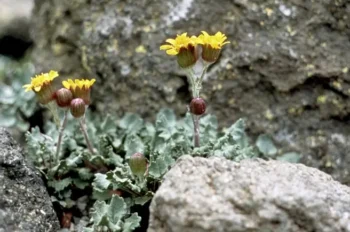
San Francisco Peaks Ragwort: A Rare Alpine Treasure Worth Protecting
Hidden high in the mountains of northern Arizona grows one of North America’s rarest wildflowers: the San Francisco Peaks ragwort (Packera franciscana). This tiny alpine gem is so rare and specialized that most gardeners will never encounter it—and that’s probably for the best. Let me tell you why this little yellow-flowered beauty deserves our respect and protection rather than a spot in our gardens.
What Makes This Plant So Special?
San Francisco Peaks ragwort is a perennial forb—essentially a non-woody flowering plant—that belongs to the sunflower family. Also known by its former scientific name Senecio franciscanus, this small plant produces clusters of bright yellow, daisy-like flowers that might remind you of tiny suns scattered across the alpine landscape.
As a native species to the lower 48 states, this ragwort calls only one place home: the high-elevation peaks of northern Arizona. It’s what botanists call an endemic species, meaning it exists naturally nowhere else on Earth.
Where Does It Grow?
The San Francisco Peaks ragwort is found exclusively in Arizona, specifically in the alpine and subalpine zones of the San Francisco Peaks area. We’re talking about elevations above 9,000 feet, where the air is thin, the growing season is short, and the conditions are harsh by most standards.
- Species observed
- No observations
Why You Shouldn’t Plant It (And Why That’s Okay!)
Here’s where things get serious. This little plant carries a Global Conservation Status of S1, which means it’s critically imperiled. With typically five or fewer known locations and very few remaining individuals (fewer than 1,000), it’s also listed as Threatened in the United States. In simple terms: this plant is hanging on by a thread.
Even if you could somehow get your hands on seeds or plants (which you shouldn’t), San Francisco Peaks ragwort has incredibly specialized growing requirements:
- Extreme high elevation conditions (9,000+ feet)
- Specific rocky, well-draining alpine soils
- Cold winter temperatures with snow protection
- Short, cool growing seasons
- Specialized pollinator relationships
Attempting to grow this plant outside its native habitat is not only likely to fail but could also contribute to the decline of wild populations if plants were collected irresponsibly.
What Can You Do Instead?
While you can’t and shouldn’t try to grow San Francisco Peaks ragwort, you can still support native plant conservation and enjoy beautiful ragworts in your garden. Consider these alternatives:
- Plant other native Packera species appropriate for your region
- Support conservation organizations working to protect rare alpine plants
- Create habitat for local pollinators with native wildflowers
- Visit the San Francisco Peaks area respectfully to see this plant in its natural habitat (but don’t collect!)
The Bigger Picture
San Francisco Peaks ragwort serves as a perfect example of why native plant gardening isn’t just about what we can grow, but also about what we choose to protect. Sometimes the most important thing we can do for a plant is simply leave it alone and work to preserve its natural habitat.
This rare alpine survivor has been quietly blooming on Arizona’s high peaks for thousands of years, adapting to one of North America’s most challenging environments. Its story reminds us that not every beautiful native plant belongs in our gardens—some are meant to remain wild, serving as guardians of our most precious and fragile ecosystems.
So while you won’t find San Francisco Peaks ragwort at your local nursery (and you shouldn’t), its existence enriches our natural heritage and serves as inspiration for protecting the native plants we can responsibly grow and enjoy.