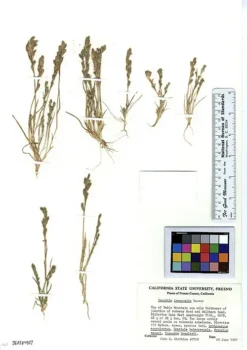
San Joaquin Valley Orcutt Grass: A Rare Wetland Treasure Worth Protecting
Meet one of California’s most endangered grasses – the San Joaquin Valley Orcutt grass (Orcuttia inaequalis). This isn’t your typical lawn grass or garden ornamental. Instead, it’s a fascinating survivor from a disappearing world of seasonal pools that once dotted California’s Central Valley like jewels across the landscape.
What Makes This Grass So Special?
San Joaquin Valley Orcutt grass is what botanists call a graminoid – essentially a grass or grass-like plant. But don’t let its humble grass status fool you. This annual species has adapted to one of the most challenging environments on Earth: vernal pools that flood in winter and spring, then completely dry out by summer.
The plant goes by the scientific name Orcuttia inaequalis and was formerly classified as a variety of Orcuttia californica. While it may not have flashy flowers or eye-catching foliage, its survival story is nothing short of remarkable.
Where Does It Call Home?
This rare grass is native to California’s Central Valley, where it once thrived in the region’s extensive vernal pool systems. Today, it clings to existence in the few remaining pools that haven’t been converted to agriculture or development.
- Species observed
- No observations
A Plant on the Brink
Here’s where things get serious: San Joaquin Valley Orcutt grass is critically imperiled. With a global conservation status of S1, it typically has five or fewer occurrences with very few remaining individuals (fewer than 1,000). It’s also listed as Threatened in the United States. This means every single plant matters for the species’ survival.
Why Would You Want to Grow It?
Let’s be honest – most gardeners won’t be growing this grass in their backyard borders. But there are compelling reasons why conservation-minded gardeners and restoration professionals should care about it:
- Conservation value: Growing responsibly sourced plants helps preserve genetic diversity
- Educational importance: It tells the story of California’s vanishing vernal pool ecosystems
- Specialized garden projects: Perfect for constructed vernal pools or wetland restoration
- Research value: Supports scientific studies on rare plant conservation
The Challenge of Growing Orcutt Grass
This isn’t a plant for beginners or typical garden settings. San Joaquin Valley Orcutt grass is an obligate wetland species, meaning it almost always occurs in wetlands. It requires very specific conditions:
- Seasonal flooding: Needs winter and spring inundation followed by complete summer drying
- Special soil: Clay soils that can hold water during wet periods
- Climate match: USDA zones 9-10 with Mediterranean climate patterns
- Timing: Must complete its annual lifecycle in sync with natural flood cycles
A Word of Caution
Given its critically imperiled status, San Joaquin Valley Orcutt grass should only be grown with responsibly sourced material. This means:
- Working with licensed native plant nurseries
- Ensuring seeds or plants come from legal, ethical sources
- Never collecting from wild populations
- Consulting with local botanists or conservation organizations
Who Should Consider Growing It?
This specialized grass is best suited for:
- Wetland restoration professionals
- Botanical gardens with vernal pool exhibits
- Research institutions studying rare plants
- Advanced native plant enthusiasts with appropriate facilities
The Bigger Picture
While most gardeners won’t grow San Joaquin Valley Orcutt grass directly, learning about it helps us understand the importance of preserving specialized habitats. Every time we choose native plants for our gardens, support wetland conservation, or advocate for protecting remaining natural areas, we’re helping species like this remarkable grass survive.
Sometimes the most important plants aren’t the showiest ones – they’re the quiet survivors that remind us of the incredible diversity we stand to lose if we don’t act as careful stewards of our natural heritage.