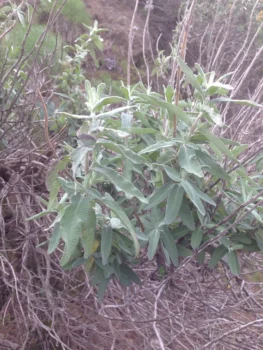
San Luis Purple Sage: A Fragrant Native Beauty for Water-Wise Gardens
If you’re dreaming of a garden that looks stunning year-round while barely touching your water bill, let me introduce you to San Luis purple sage (Salvia leucophylla). This California native is like that reliable friend who always shows up looking effortlessly put-together – silvery-gray foliage, gorgeous purple flower spikes, and an intoxicating fragrance that’ll make you want to brush against it every time you walk by.
What Makes San Luis Purple Sage Special
San Luis purple sage is a perennial shrub that typically grows 3-4 feet tall and wide, creating a lovely mounded shape that works beautifully as a focal point or grouped with other native plants. Its common name comes from its stunning purple to lavender flower spikes that appear from late spring through summer, creating a striking contrast against the silvery foliage.
As a native species to the lower 48 states, specifically California, this sage has evolved to thrive in our local conditions. You’ll find it naturally growing in the coastal sage scrub and chaparral communities of southern California, particularly in San Luis Obispo, Santa Barbara, Ventura, and Los Angeles counties.
- Species observed
- No observations
Why Your Garden (and Local Wildlife) Will Love It
Here’s where San Luis purple sage really shines – it’s a pollinator magnet! Those beautiful flower spikes aren’t just pretty to look at; they’re packed with nectar that attracts:
- Native bees and honey bees
- Butterflies and other beneficial insects
- Hummingbirds who can’t resist those tubular flowers
Beyond the pollinator benefits, this sage fits perfectly into several garden styles. It’s absolutely perfect for Mediterranean-style landscapes, drought-tolerant gardens, and native plant communities. The aromatic foliage adds a sensory element that makes every garden stroll more enjoyable.
Growing San Luis Purple Sage Successfully
The best part about this native beauty? It’s surprisingly easy to grow once you understand what it wants.
Perfect Growing Conditions
- Sunlight: Full sun is essential for best flowering and compact growth
- Soil: Well-draining soil is non-negotiable – think sandy or rocky conditions
- Water: Drought tolerant once established (usually after the first year)
- Climate: Hardy in USDA zones 8-10
Planting and Care Tips
Fall is your best friend when it comes to planting San Luis purple sage. The cooler weather and (hopefully) upcoming winter rains give your new plant the best chance to establish strong roots before facing its first summer.
For the first year, water regularly to help establish the root system – think deep, infrequent watering rather than daily sprinkles. Once established, this sage is incredibly drought tolerant and actually performs better with minimal summer water.
Pruning is simple: give it a light trim after flowering to maintain shape and encourage bushier growth. Avoid the temptation to overwater – too much moisture can lead to root rot and a generally unhappy plant.
A Word About Conservation
Here’s something important to know: San Luis purple sage has a Global Conservation Status of S3?, which means its conservation status needs more definition and study. While this doesn’t mean you shouldn’t grow it, it does mean you should source your plants responsibly from reputable native plant nurseries that propagate their own stock rather than collecting from wild populations.
Is San Luis Purple Sage Right for Your Garden?
This sage is perfect if you’re looking to create a water-wise garden that supports local wildlife while providing year-round beauty. It works wonderfully in coastal gardens, Mediterranean-style landscapes, and as part of a larger native plant community.
However, it might not be the best choice if you have heavy clay soil that doesn’t drain well, or if you prefer a more formal, high-maintenance garden style. This is a plant that thrives on a bit of benign neglect once established.
San Luis purple sage proves that native plants can be both practical and beautiful. With its drought tolerance, wildlife benefits, and aromatic charm, it’s a fantastic choice for gardeners who want to create landscapes that work with nature rather than against it. Just remember to source responsibly and enjoy watching your garden buzz with happy pollinators!