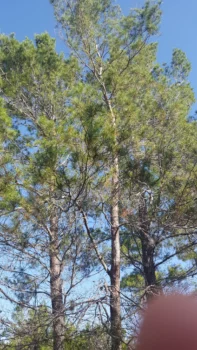
Sand Pine: A Unique Native Conifer for Specialized Landscapes
If you’re looking for a native tree that thrives in challenging sandy conditions where other trees struggle, the sand pine might just be your answer. This distinctive southeastern native has carved out its own niche in some of the region’s most demanding environments, and it can bring that same resilience to the right garden setting.
Meet the Sand Pine
Sand pine (Pinus clausa) is a perennial evergreen tree native to the southeastern United States. Unlike its towering pine cousins, this species has developed a more modest and uniquely scraggly appearance that reflects its adaptation to harsh, sandy environments. It’s a true survivor that has learned to thrive where many other trees simply can’t establish.
Where Sand Pine Calls Home
This native pine naturally grows across Alabama, Florida, Georgia, Mississippi, North Carolina, and Texas. You’ll find it primarily in coastal scrublands and sandy inland areas where the soil drains quickly and nutrients are scarce. It’s particularly common in Florida’s scrub ecosystems, where it forms distinctive communities adapted to periodic fires and drought.
- Species observed
- No observations
A Word About Rarity
Before we dive into growing sand pine, it’s important to note that this species has a rarity status of S2 in Alabama, meaning it’s considered rare in that state. If you’re interested in planting sand pine, please ensure you source your plants or seeds from reputable nurseries that use responsibly collected material. Never collect from wild populations.
What to Expect: Growth and Appearance
Sand pine is definitely not your typical stately pine tree. Here’s what makes it unique:
- Size: Reaches about 30 feet at 20 years, with mature trees growing up to 80 feet tall
- Growth rate: Slow-growing, so patience is key
- Form: Single-stemmed with an erect but often irregular, open crown
- Foliage: Fine-textured green needles that create moderate porosity year-round
- Lifespan: Relatively short for a pine, adapted to fire cycles in its native habitat
The tree produces small yellow flowers in fall (though they’re not particularly showy), followed by brown cones that persist on the tree and release seeds periodically.
Is Sand Pine Right for Your Landscape?
Sand pine isn’t for every garden, but it can be perfect in the right setting. Consider it if you have:
- Sandy, well-draining soil that other trees struggle with
- A naturalistic or native plant garden design
- Coastal or inland areas within USDA zones 8-10
- Limited water availability for irrigation
- A desire to support native ecosystems
This tree shines in native plant gardens, coastal landscapes, and xeriscaping projects where its drought tolerance and adaptation to poor soils become major assets rather than limitations.
Growing Conditions: Embracing the Challenging
Sand pine’s superpower lies in its ability to thrive in conditions that would stress most other trees:
- Soil: Requires coarse, sandy soils with excellent drainage; won’t tolerate heavy clay or poorly draining sites
- pH: Prefers acidic conditions (4.2-5.5 pH)
- Sun: Full sun with intermediate shade tolerance
- Water: Medium moisture use; drought tolerant once established but has low drought tolerance initially
- Fertility: Actually prefers low-fertility soils and doesn’t need rich, amended earth
- Climate: Needs at least 265 frost-free days and minimum temperatures no lower than 2°F
Planting and Care Tips
Successfully growing sand pine is all about matching its specific needs:
- Site selection: Choose the sandiest, most well-draining spot in your landscape
- Planting: Can be grown from seed, cuttings, or container plants; bare root planting is also possible
- Spacing: Allow 430-700 plants per acre if mass planting
- Fertilization: Minimal fertilizer needs; over-fertilizing can actually harm the tree
- Watering: Water regularly during establishment, then rely on natural rainfall
- Pruning: Minimal pruning needed; the natural form is part of its charm
Propagation Notes
If you’re interested in propagating sand pine, seeds are the most reliable method. With about 75,200 seeds per pound, a little goes a long way. Seeds require cold stratification and have medium abundance and vigor. Unfortunately, commercial availability is limited, so you may need to work with specialty native plant nurseries.
The Bottom Line
Sand pine isn’t the tree for every gardener or every landscape, but for those dealing with challenging sandy soils and seeking to create authentic native ecosystems, it can be an invaluable addition. Its unique appearance, drought tolerance, and ecological significance make it worth considering—just remember to source responsibly and be patient with its slow growth rate.
If you have the right conditions and appreciate plants that have evolved to thrive in tough environments, sand pine might just become one of your most interesting and resilient landscape companions.