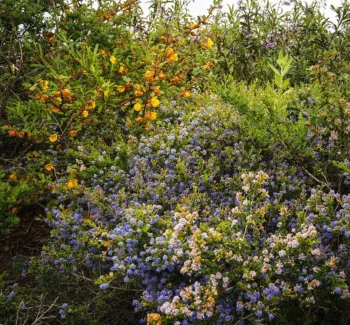
Sandscrub Ceanothus: A Rare California Native Worth Growing Responsibly
If you’re looking for a drought-tolerant shrub that supports local wildlife while adding year-round beauty to your garden, sandscrub ceanothus (Ceanothus dentatus) might be exactly what you need. This California native brings both ecological value and low-maintenance charm to the right landscape – but there’s an important conservation angle to consider before you plant.
What is Sandscrub Ceanothus?
Sandscrub ceanothus is a perennial, evergreen shrub native exclusively to California. True to its name, this hardy plant thrives in sandy, well-draining soils and typically grows as a multi-stemmed woody plant reaching 4-5 feet in height and width. Its compact, spreading growth habit makes it an excellent choice for groundcover or low hedging in the right conditions.
The plant produces clusters of small, fragrant flowers that range from white to pale blue, creating a stunning display during its blooming period. The small, evergreen leaves provide year-round structure and texture to the landscape.
Where Does It Grow Naturally?
This ceanothus species is found naturally along California’s central coast and on some of the Channel Islands. Its native range is quite limited compared to other ceanothus species, which brings us to an important consideration for gardeners.
- Species observed
- No observations
A Conservation Consideration
Here’s something crucial to know: sandscrub ceanothus has a Global Conservation Status of S2S3, indicating that it faces some level of conservation concern in the wild. This doesn’t mean you shouldn’t plant it – in fact, growing native plants in appropriate gardens can support conservation efforts! However, it does mean you should be extra careful about sourcing.
Always purchase from reputable native plant nurseries that propagate their own plants rather than collecting from wild populations. Ask questions about their sourcing practices to ensure you’re supporting responsible cultivation.
Why Grow Sandscrub Ceanothus?
Despite its conservation status (or perhaps because of it), there are compelling reasons to include this plant in appropriate landscapes:
- Drought tolerance: Once established, it requires minimal supplemental watering
- Pollinator magnet: The nectar-rich flowers attract native bees, butterflies, and other beneficial insects
- Low maintenance: Requires little care once established in the right conditions
- Erosion control: Its spreading habit helps stabilize slopes and sandy soils
- Salt tolerance: Perfect for coastal gardens where salt spray is a concern
- Year-round interest: Evergreen foliage provides structure in all seasons
Growing Conditions and Care
Sandscrub ceanothus is particular about its growing conditions, but when its needs are met, it’s remarkably easy to care for:
Sunlight: Requires full sun for best flowering and growth
Soil: Absolutely must have well-draining, sandy soil. Heavy clay soils are a death sentence for this plant. If your soil doesn’t drain well, consider raised beds or containers.
Water: Drought-tolerant once established (usually after 1-2 years). Water deeply but infrequently during the first year, then reduce watering significantly.
Climate: Hardy in USDA zones 8-10, making it suitable for mild coastal and Mediterranean climates
Planting and Care Tips
- Best planting time: Fall planting gives roots time to establish before summer heat
- Spacing: Plant 4-6 feet apart for eventual coverage
- Mulching: Use gravel or decomposed granite rather than organic mulches, which can retain too much moisture
- Pruning: Light pruning after flowering helps maintain shape; avoid heavy pruning
- Fertilizing: Generally unnecessary and can actually harm the plant
- Avoid overwatering: More ceanothus die from too much water than too little
Landscape Uses
Sandscrub ceanothus shines in specific landscape situations:
- Mediterranean gardens: Perfect companion for other drought-tolerant plants
- Coastal landscapes: Handles salt spray and sandy conditions with ease
- Slope stabilization: Excellent for erosion-prone areas
- Native plant gardens: Essential for supporting local ecosystems
- Water-wise landscapes: Ideal for drought-conscious gardening
The Bottom Line
Sandscrub ceanothus is a beautiful, ecologically valuable native plant that deserves a place in appropriate California gardens. Its drought tolerance, pollinator benefits, and low-maintenance nature make it an excellent choice for the right conditions. Just remember to source responsibly and ensure your garden can provide the well-draining conditions this special plant requires.
If your garden doesn’t have the sandy, well-draining soil this plant needs, consider other California native ceanothus species that might be better suited to your conditions – there are plenty of options in this diverse and valuable plant family!