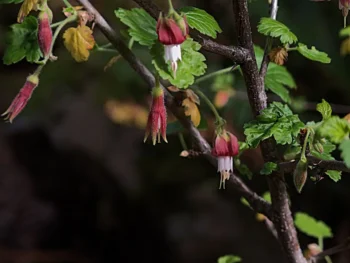
Santa Cruz Gooseberry: A Rare California Native Worth Growing
If you’re passionate about California native plants and want to add something truly special to your garden, the Santa Cruz gooseberry (Ribes thacherianum) might just be your next favorite shrub. This charming native offers delicate spring blooms, wildlife benefits, and the satisfaction of growing a plant that’s perfectly adapted to our Golden State climate.
What Makes Santa Cruz Gooseberry Special
The Santa Cruz gooseberry is a perennial shrub that typically grows as a multi-stemmed woody plant, usually staying under 13-16 feet in height. Don’t let the gooseberry name fool you into thinking it’s just about fruit – this native beauty brings much more to the table than its small berries.
This species is endemic to California, meaning it grows naturally nowhere else in the world. You’ll find it thriving in coastal areas and the Santa Cruz Mountains region, where it has adapted perfectly to our Mediterranean climate.
- Species observed
- No observations
Garden Appeal and Landscape Role
What draws gardeners to Santa Cruz gooseberry? Here’s what makes it shine:
- Delicate white to pinkish flowers that appear in spring, creating a soft, naturalistic display
- Thorny stems that provide excellent wildlife habitat and natural security screening
- Deciduous foliage that changes with the seasons
- Perfect for understory plantings in woodland gardens
- Excellent for erosion control on slopes
This shrub works beautifully in native California gardens, naturalized areas, and woodland settings. It’s not typically a specimen plant that demands center stage, but rather a reliable supporting player that adds authentic California character to your landscape.
Wildlife and Pollinator Benefits
One of the best reasons to grow Santa Cruz gooseberry is its value to local wildlife. The spring flowers attract bees, butterflies, and other pollinators who depend on native plants for nectar. The thorny branches provide safe nesting sites for small birds, while the berries offer food for various wildlife species.
Growing Conditions and Care
The good news? Santa Cruz gooseberry is relatively easy to grow once you understand its preferences:
- USDA Hardiness Zones: 8-10
- Light: Partial shade to full sun
- Soil: Well-draining soil is essential
- Water: Drought tolerant once established; minimal summer water needed
- Wetland status: Facultative Upland – usually grows in non-wetland areas
Planting and Care Tips
For best success with your Santa Cruz gooseberry:
- Plant in fall or early spring when temperatures are mild
- Choose a location with good drainage – soggy soil is this plant’s enemy
- Water regularly the first year to establish roots, then reduce watering
- Prune occasionally to maintain shape and remove dead wood
- Mulch around the base to retain moisture and suppress weeds
Important Conservation Note
Before you rush out to buy Santa Cruz gooseberry, there’s something important to know. This species has a Global Conservation Status of S4T2, indicating it has some rarity concerns. While this shouldn’t discourage you from growing it, it does mean you should be extra careful about sourcing.
Always purchase from reputable native plant nurseries that propagate their own stock rather than wild-collecting. Never dig plants from the wild, and if you’re growing this species, consider it a contribution to conservation efforts.
Is Santa Cruz Gooseberry Right for Your Garden?
This native shrub is perfect for gardeners who:
- Want to support local wildlife and pollinators
- Prefer low-maintenance, drought-tolerant plants
- Are creating authentic California native plant gardens
- Need plants for naturalized or woodland areas
- Want to contribute to conservation of rare native species
Santa Cruz gooseberry may not be the showiest plant in your garden, but it offers something more valuable – a direct connection to California’s unique natural heritage and a helping hand to local wildlife. When you plant this rare native, you’re not just gardening; you’re participating in conservation.