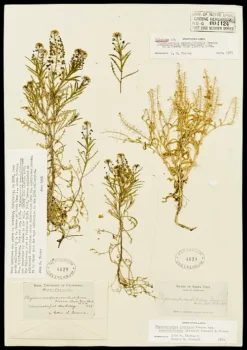
Santa Cruz Island Fringepod: A Rare California Endemic Worth Protecting
If you’re passionate about California’s native plants, you might be curious about the Santa Cruz Island fringepod (Thysanocarpus conchuliferus). But before you start planning where to plant this unique annual wildflower, there’s something crucial you need to know: this little plant is fighting for survival.
What Makes This Plant Special?
Santa Cruz Island fringepod is a member of the mustard family and one of California’s most endangered native plants. This annual forb produces delicate white flowers that develop into distinctive heart-shaped seed pods with papery, wing-like edges that give the plant its fringepod name. It’s a modest plant in stature but enormous in conservation significance.
Where Does It Call Home?
This rare gem is found exclusively on Santa Cruz Island, one of California’s Channel Islands off the coast near Santa Barbara. It’s what botanists call an endemic species – meaning it exists nowhere else on Earth naturally.
- Species observed
- No observations
Why You Shouldn’t Plant It (And What to Do Instead)
Conservation Alert: Santa Cruz Island fringepod has a Global Conservation Status of S1, meaning it’s critically imperiled with typically fewer than 5 occurrences or less than 1,000 remaining individuals. It’s listed as Endangered, making it one of California’s rarest plants.
Here’s why this matters for gardeners:
- This plant should only be grown in authorized conservation programs with responsibly sourced material
- Casual cultivation could potentially harm wild populations
- Seeds or plants should never be collected from the wild
- Home gardeners can best help by supporting conservation organizations working to protect it
Better Alternatives for Your Garden
While you can’t grow Santa Cruz Island fringepod, you can celebrate California’s mustard family with these garden-friendly relatives:
- Common fringepod (Thysanocarpus curvipes) – more widespread and garden-suitable
- California mustard (Brassica nigra) – though technically naturalized
- Wild radish (Raphanus sativus) – supports pollinators beautifully
Growing Conditions (For Conservation Context)
Understanding what Santa Cruz Island fringepod needs helps us appreciate why it’s so rare. This annual thrives in:
- Island chaparral and coastal scrub habitats
- Mediterranean climate conditions (likely USDA zones 9-10)
- Well-draining soils typical of California’s islands
- Cool, moist winters and dry summers
Supporting Conservation Efforts
As gardeners, we can play a role in protecting rare species like Santa Cruz Island fringepod:
- Support organizations like The Nature Conservancy and Channel Islands National Park
- Choose abundant native alternatives for your garden
- Spread awareness about California’s rare plants
- Participate in citizen science projects that monitor plant populations
The Bigger Picture
While Santa Cruz Island fringepod isn’t destined for your garden beds, learning about it connects us to California’s incredible botanical diversity. Every rare plant tells a story about habitat loss, climate change, and the importance of conservation. By understanding these stories, we become better stewards of the plants we can grow and the wild spaces that need our protection.
Sometimes the best way to honor a plant is to admire it from afar and ensure future generations will have that same opportunity.