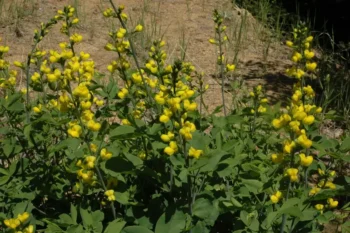
Santa Inez Goldenbanner: A Rare California Native Worth Protecting
Meet the Santa Inez goldenbanner (Thermopsis macrophylla), one of California’s most endangered wildflowers. This perennial beauty is so rare that it’s earned a Global Conservation Status of S1, meaning it’s critically imperiled with typically only 5 or fewer occurrences remaining in the wild. If you’re passionate about native plant conservation, this golden gem deserves a spot on your radar.
What Makes This Plant Special?
The Santa Inez goldenbanner is a herbaceous perennial forb, which simply means it’s a soft-stemmed flowering plant that comes back year after year. Unlike woody shrubs or trees, this plant lacks significant woody tissue and dies back to its roots during dormant periods before emerging again with fresh growth.
This member of the pea family produces stunning bright yellow flowers arranged in showy terminal clusters. The blooms typically appear in spring, creating a spectacular golden display that attracts native bees and other important pollinators. The plant’s compound leaves feature three leaflets, giving it that classic pea-family appearance.
Where Does It Call Home?
The Santa Inez goldenbanner is endemic to California, meaning it exists nowhere else on Earth. Its natural habitat is extremely limited, found only in the Santa Ynez Mountains and surrounding areas of Santa Barbara County. This incredibly narrow geographic distribution is one of the reasons why this species is so vulnerable to extinction.
- Species observed
- No observations
Should You Grow Santa Inez Goldenbanner?
Here’s where things get serious. While this plant would make an extraordinary addition to any California native garden, its critically imperiled status means we need to approach it with extreme caution and respect.
The conservation reality: With fewer than 1,000 individuals likely remaining in the wild, every single plant of this species is precious. If you’re considering adding Santa Inez goldenbanner to your garden, it’s absolutely crucial that you source it only from reputable native plant nurseries that propagate from ethically collected seeds or cuttings—never from wild-harvested plants.
Growing Conditions and Care
If you’re fortunate enough to obtain responsibly sourced Santa Inez goldenbanner, here’s what it needs to thrive:
- Climate: Best suited for USDA hardiness zones 8-10, matching its native California coastal mountain habitat
- Soil: Well-draining soil is essential—this plant won’t tolerate soggy conditions
- Water: Moderate water needs, following natural rainfall patterns when possible
- Sun exposure: Likely prefers partial shade to full sun, mimicking chaparral or woodland edge conditions
- Garden type: Perfect for specialized California native plant gardens, conservation gardens, or botanical collections
Pollinator and Wildlife Benefits
Despite its rarity, the Santa Inez goldenbanner plays an important ecological role. Its bright yellow flowers are magnets for native bees and other pollinators during its spring blooming period. By growing this plant (responsibly sourced, of course), you’re providing crucial habitat for California’s native pollinator species.
A Conservation Success Story in Your Garden
Growing Santa Inez goldenbanner isn’t just about adding beauty to your landscape—it’s about participating in conservation. Every responsibly grown plant represents hope for this species’ survival. Consider it a living piece of California’s natural heritage that you’re helping to preserve.
If you can’t find or responsibly source this rare beauty, consider supporting its conservation by growing other California native plants that provide similar benefits, such as other Thermopsis species or native lupines that offer comparable pollinator value.
Remember: with great rarity comes great responsibility. If you’re lucky enough to grow Santa Inez goldenbanner, you’re not just a gardener—you’re a conservation steward protecting one of California’s most precious botanical treasures.