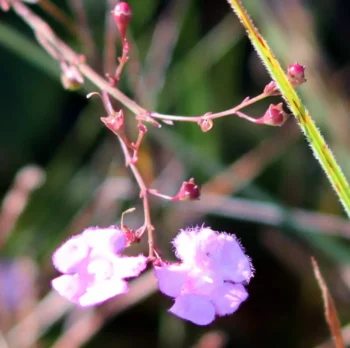
Scaleleaf False Foxglove: A Rare Southeastern Beauty Worth Protecting
Meet the scaleleaf false foxglove (Agalinis aphylla), one of the Southeast’s most delicate and elusive native wildflowers. This annual beauty might just be the most understated star of late-season gardens – if you can find it! With its threadlike stems and tiny pink blooms, this little charmer is like nature’s own minimalist masterpiece.
What Makes This Plant Special
Don’t let the name fool you – scaleleaf false foxglove isn’t actually a foxglove at all. This slender annual forb belongs to a completely different plant family and has earned its false designation through its tubular flowers that somewhat resemble true foxgloves. What makes it truly special is its almost ethereal appearance: imagine delicate pink to purple trumpet-shaped flowers dancing on practically leafless stems that sway in the slightest breeze.
The plant’s scientific name, Agalinis aphylla, literally means without leaves, which perfectly describes its distinctive sparse foliage. You might also see it listed under its old botanical name, Gerardia aphylla, in older gardening references.
Where You’ll Find It Growing Wild
Scaleleaf false foxglove is a true southerner, calling the coastal plains of Alabama, Florida, Georgia, Louisiana, Mississippi, North Carolina, and South Carolina home. This native beauty has adapted perfectly to the unique conditions of southeastern wetlands and moist meadows.
- Species observed
- No observations
A Word of Caution: Rarity Matters
Before you get too excited about adding this beauty to your garden, there’s something important you need to know. Scaleleaf false foxglove is considered rare, with a global conservation status that puts it in the vulnerable category. In Alabama specifically, it’s ranked as quite rare (S2 status). This means if you want to grow it, you absolutely must source seeds or plants responsibly from reputable native plant dealers – never collect from wild populations.
Why Gardeners Love (and Should Protect) This Plant
Despite its rarity challenges, scaleleaf false foxglove offers some compelling reasons to include it in the right garden setting:
- Late-season color: When many wildflowers are winding down, this beauty is just getting started with blooms from late summer into fall
- Pollinator magnet: Those tubular pink flowers are perfect landing strips for bees, butterflies, and other small pollinators
- Unique texture: Its nearly leafless stems add an airy, delicate quality that contrasts beautifully with broader-leaved plants
- Conservation value: Growing it responsibly helps preserve this rare species for future generations
Perfect Garden Settings
Scaleleaf false foxglove isn’t your typical border plant – it’s more of a specialty addition for specific garden types:
- Native plant gardens focused on southeastern species
- Wildflower meadows and naturalized areas
- Wetland or rain gardens
- Restoration projects in appropriate regions
Growing Conditions and Care
This plant is quite particular about its growing conditions, which partly explains its rarity. Scaleleaf false foxglove thrives in:
- Moisture: Prefers consistently moist to wet soils (it’s classified as a facultative wetland plant)
- Light: Full sun to partial shade
- Soil: Sandy or clay soils typical of coastal plain regions
- Climate: Best suited for USDA zones 8-10
As an annual, it completes its entire life cycle in one growing season, so you’ll need fresh seeds each year unless it self-seeds successfully in your garden.
Planting and Care Tips
Growing scaleleaf false foxglove successfully requires mimicking its natural habitat:
- Direct sow seeds in fall for spring germination
- Ensure consistent soil moisture throughout the growing season
- Avoid fertilizing – it prefers lean soils
- Plant in areas that won’t be disturbed, as it may form relationships with nearby plant roots
- Allow it to self-seed by leaving spent flowers in place
The Bottom Line
Scaleleaf false foxglove is definitely not a plant for every gardener or every garden. Its rarity means it requires a serious commitment to responsible sourcing and appropriate growing conditions. However, for dedicated native plant enthusiasts in the Southeast who can provide the right wetland conditions and obtain seeds through proper channels, this delicate beauty offers a unique opportunity to support conservation while enjoying one of nature’s most understated treasures.
If you’re not ready for the challenge of growing rare plants responsibly, consider other native Agalinis species that might be more common in your area, or explore other late-blooming native wildflowers that can provide similar ecological benefits with less conservation concern.