Scalloped Moonwort: A Rare and Mysterious Native Fern Worth Protecting
Meet the scalloped moonwort (Botrychium crenulatum), one of North America’s most elusive and enchanting native ferns. This tiny botanical treasure might not win any flashy garden contests, but it holds secrets that make it absolutely fascinating to anyone who appreciates the quieter wonders of our native flora.
What Exactly Is Scalloped Moonwort?
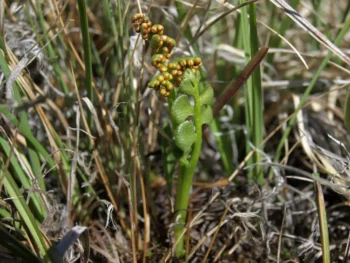
Scalloped moonwort is a perennial fern that belongs to the unique moonwort family. Unlike the typical ferns you might picture with their feathery fronds, moonworts have a completely different look. The scalloped moonwort gets its common name from its distinctive sterile frond, which features small, rounded segments with delicately scalloped edges that look almost like tiny green shells strung together.
This little fern has a peculiar two-part structure: a sterile photosynthetic frond that hugs close to the ground, and a separate fertile spike that stands upright, releasing spores when mature. The whole plant typically reaches just 2-6 inches tall, making it easy to overlook among other vegetation.
Where Does It Call Home?
Scalloped moonwort is native to both Canada and the lower 48 United States, with populations scattered across the western regions. You can find it growing naturally in Alberta, British Columbia, Arizona, California, Idaho, Montana, Nevada, Oregon, Utah, Washington, and Wyoming.
- Species observed
- No observations
This fern has a special relationship with moisture, earning it a Facultative Wetland status in both the Arid West and Western Mountains regions. This means it usually hangs out in wetland areas but can occasionally pop up in drier spots when conditions are just right.
A Conservation Concern
Here’s where things get serious: scalloped moonwort has a Global Conservation Status of S3, which means it’s considered Vulnerable. This classification indicates that the species is either very rare throughout its range or faces factors that make it vulnerable to disappearing entirely. We’re typically talking about only 21 to 100 known occurrences or between 3,000 and 10,000 individual plants worldwide.
This rarity status is crucial for anyone who might encounter this fern in the wild or consider it for their garden.
Should You Grow Scalloped Moonwort in Your Garden?
The short answer is: probably not, and here’s why. While we’d love to help every gardener succeed with native plants, scalloped moonwort presents some unique challenges:
- Extreme rarity: With its vulnerable conservation status, this fern needs our protection in its natural habitats rather than removal for cultivation
- Complex growing requirements: Moonworts have intricate relationships with specific soil fungi (mycorrhizae) that are nearly impossible to replicate in garden settings
- Difficult propagation: These ferns are notoriously challenging to grow from spores and don’t transplant well
- Specialized habitat needs: They require very specific moisture, soil, and microclimate conditions
How to Appreciate This Special Fern
Instead of trying to grow scalloped moonwort, here’s how you can appreciate and support this remarkable native:
- Learn to identify it: If you’re hiking in western mountainous or wetland areas, keep an eye out for its distinctive scalloped fronds
- Photograph, don’t pick: If you’re lucky enough to spot one, take pictures to share its beauty without disturbing the plant
- Support conservation: Consider donating to organizations that protect native plant habitats
- Choose alternative natives: For your garden, select other native ferns that are more common and easier to grow
Better Native Alternatives for Your Garden
If you’re drawn to native ferns for your western garden, consider these more garden-friendly options that won’t put rare species at risk:
- Lady fern (Athyrium filix-femina)
- Bracken fern (Pteridium aquilinum) – where space allows
- Western sword fern (Polystichum munitum) – for Pacific Northwest gardens
- Fragile fern (Cystopteris fragilis)
The Bigger Picture
Scalloped moonwort reminds us that not every native plant is meant for our gardens—and that’s perfectly okay. Some species serve their ecosystems best when left undisturbed in their natural habitats. By respecting the rarity and specialized needs of plants like scalloped moonwort, we become better stewards of our native flora.
The next time you’re exploring western wetlands or mountain meadows, keep your eyes peeled for this little botanical gem. Spotting a scalloped moonwort in the wild is like finding a four-leaf clover—rare, special, and definitely worth celebrating from a respectful distance.