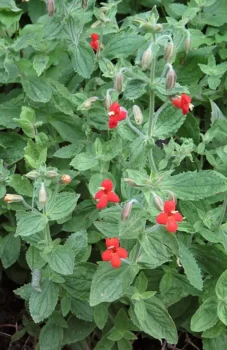
Scarlet Monkeyflower: A Brilliant Native for Water-Loving Gardens
If you’ve ever dreamed of attracting hummingbirds to your garden while adding a splash of brilliant red color to those tricky moist spots, let me introduce you to the scarlet monkeyflower (Mimulus cardinalis). This stunning native perennial is like nature’s exclamation point, demanding attention with its vibrant scarlet blooms that seem to glow against green foliage.
What Makes Scarlet Monkeyflower Special
The scarlet monkeyflower is a true American native, naturally occurring across seven western states: Arizona, California, Nevada, New Mexico, Oregon, Utah, and Washington. This herbaceous perennial belongs to a group of plants called forbs – essentially, it’s a flowering plant without woody stems that dies back to the ground each winter and returns with vigor each spring.
What really sets this plant apart is its incredible flower power. Those tubular, bright red blooms aren’t just eye candy – they’re perfectly designed hummingbird magnets. The flowers appear from spring through summer, creating an extended season of interest that coincides beautifully with hummingbird migration and nesting periods.
- Species observed
- No observations
Size and Growth Habits
Don’t let the word monkeyflower fool you into thinking this is a tiny plant. Scarlet monkeyflower can reach up to 2.5 feet tall with a moderate growth rate, spreading slowly through underground rhizomes to form attractive colonies over time. The plant has an upright, erect growth habit that creates nice vertical interest without being overwhelming.
The foliage is medium-textured and green, providing a lovely backdrop for those show-stopping flowers. While the leaves aren’t particularly noteworthy on their own, they become quite attractive in fall, adding seasonal interest to your garden.
Perfect Garden Roles
This is where scarlet monkeyflower really shines – it’s the perfect solution for those challenging wet spots that many gardeners struggle with. Here are the ideal ways to use this native beauty:
- Rain gardens and bioswales
- Pond and stream edges
- Bog gardens
- Naturalized woodland settings with consistent moisture
- Wildlife and pollinator gardens
- Native plant landscapes
Growing Conditions: The Water Connection
Here’s the key to success with scarlet monkeyflower – think wet feet, happy plant. This species has a Facultative Wetland status in both the Arid West and Western Mountains regions, meaning it usually occurs in wetlands but can tolerate some drier conditions occasionally.
The plant thrives in:
- Consistently moist to wet soils
- Medium-textured soils (not too sandy, not too clay-heavy)
- Partial shade to full shade (shade tolerant)
- pH levels between 6.0 and 7.2
- Areas with 24-45 inches of annual precipitation
- USDA hardiness zones 5-9 (tolerates temperatures down to -28°F)
The drought tolerance is low, so this isn’t a plant for xeriscaping or water-wise gardens unless you can guarantee consistent irrigation.
Planting and Care Tips
Growing scarlet monkeyflower successfully is all about location, location, location. Here’s how to set your plants up for success:
Planting: Spring is the ideal planting time. Space plants about 12-18 inches apart if you’re creating a colony effect, or plant singly as specimen plants. You can grow them from seed (there are about 4 million seeds per pound!), from containers, or from bare root plants.
Soil Preparation: Ensure your planting area stays consistently moist. If you’re not naturally blessed with wet conditions, consider installing drip irrigation or choosing a spot that receives runoff from other areas.
Ongoing Care: This is refreshingly low-maintenance once established in the right conditions. The plant has moderate regrowth after blooming and will benefit from regular water during dry spells. No fertilizer requirements beyond medium fertility soils.
Propagation: Seeds can be collected in summer when ripe, though abundance is typically low. The plant spreads slowly on its own through rhizomes, so be patient if you want a larger colony.
Wildlife and Pollinator Benefits
This is where scarlet monkeyflower really earns its place in the garden ecosystem. Those brilliant red, tubular flowers are specifically adapted for hummingbird pollination – the shape, color, and nectar production are perfectly matched to hummingbird preferences and feeding behaviors.
Beyond hummingbirds, the flowers also attract butterflies and other beneficial pollinators, making this plant a valuable addition to any wildlife-friendly landscape.
Is Scarlet Monkeyflower Right for Your Garden?
This native beauty is an excellent choice if you:
- Have naturally moist or wet areas in your landscape
- Want to attract hummingbirds
- Prefer native plants
- Need color for shaded, moist areas
- Are creating a rain garden or bog garden
- Live in the western United States within its native range
However, scarlet monkeyflower might not be the best fit if you:
- Have exclusively dry garden conditions
- Cannot provide consistent moisture
- Live outside its hardy range
- Prefer low-water gardening exclusively
The Bottom Line
Scarlet monkeyflower is one of those special native plants that solves problems while adding beauty. If you’ve been struggling with what to plant in that persistently moist, partially shaded area, or if you’ve been dreaming of regular hummingbird visits, this vibrant native could be exactly what your garden needs. Just remember – happy monkeyflowers have wet feet and some shade, and in return, they’ll reward you with months of brilliant blooms and delighted hummingbirds.