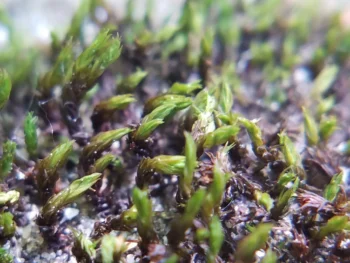
Schistidium Moss: A Hardy Native Bryophyte for Rock Gardens
If you’ve ever noticed tiny, cushion-like patches of dark green growth clinging to rocks or stone walls, you might have encountered schistidium moss (Schistidium apocarpum). This unassuming little bryophyte is actually a fascinating native plant that deserves a closer look from gardeners interested in low-maintenance, drought-tolerant ground cover options.
What Exactly Is Schistidium Moss?
Schistidium moss belongs to the bryophyte family, which includes mosses, liverworts, and hornworts. Unlike flowering plants, mosses are non-vascular, meaning they don’t have the complex root and stem systems we’re used to seeing in typical garden plants. Instead, they absorb water and nutrients directly through their leaves and use tiny root-like structures called rhizoids to anchor themselves to surfaces.
This particular species is a terrestrial moss that has a strong preference for attaching itself to solid objects like rocks, stone walls, or even dead wood rather than growing directly in soil. It’s completely herbaceous and forms small, dense cushions or mats that can create interesting textural elements in the landscape.
Where Does It Come From?
Schistidium moss is native to North America, with a distribution that spans much of the continent’s cooler regions. You’ll find it naturally occurring throughout Canada, the northern United States, and in mountainous areas where conditions suit its hardy nature. This wide distribution speaks to its remarkable adaptability to different climatic conditions.
Identifying Schistidium Moss in Your Garden
Spotting schistidium moss is relatively straightforward once you know what to look for:
- Forms small, compact cushions or mats
- Color ranges from dark green to blackish-green
- Typically grows on rocks, stone walls, concrete, or wood surfaces
- Creates a velvety or carpet-like texture
- Individual plants are quite small, but colonies can spread over larger areas
Is It Beneficial for Your Garden?
Absolutely! Schistidium moss offers several benefits for gardeners, especially those working with challenging rocky or dry conditions:
- Natural erosion control: Helps stabilize soil and prevent erosion on rocky slopes
- Low maintenance: Once established, requires virtually no care
- Drought tolerance: Thrives in dry conditions where other plants struggle
- Year-round interest: Provides consistent texture and color throughout seasons
- Habitat creation: Provides microhabitats for tiny soil organisms
Perfect Garden Settings
This hardy moss is particularly well-suited for:
- Rock gardens and alpine landscapes
- Green roofs and extensive roof systems
- Xerophytic or drought-tolerant gardens
- Natural or wildscape designs
- Stone walls and hardscape features
Growing Conditions and Care
One of the most appealing aspects of schistidium moss is its minimal care requirements. It prefers:
- Well-drained, rocky substrates
- Full sun to partial shade exposure
- Alkaline soil conditions
- USDA hardiness zones 3-8
- Minimal to no supplemental watering once established
A Word About Conservation
Before you start planning your moss garden, it’s important to note that Schistidium apocarpum has a Global Conservation Status of S2S3, indicating some level of rarity or concern about its populations. This means you should be thoughtful about sourcing. Rather than collecting moss from the wild (which can harm natural populations), consider:
- Purchasing from reputable native plant nurseries
- Looking for responsibly propagated specimens
- Allowing natural colonization if conditions are right
- Consulting with local botanists or extension services about ethical sourcing
The Bottom Line
Schistidium moss might not be the showiest addition to your garden, but it’s certainly one of the most resilient and low-maintenance options available. For gardeners dealing with rocky, dry, or challenging growing conditions, this native moss can provide year-round interest while supporting local ecosystems. Just remember to source it responsibly and let this hardy little plant do what it does best – thrive in places where other plants simply can’t.
Whether you’re designing a rock garden, working with a green roof, or simply want to embrace the natural beauty of bryophytes, schistidium moss offers a unique and sustainable option that connects your landscape to North America’s native plant heritage.