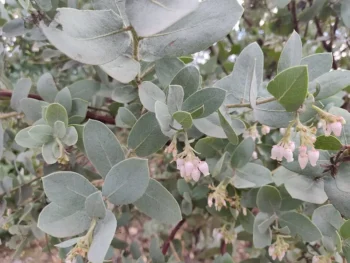
Schreiber’s Manzanita: A Rare California Treasure for Your Native Garden
Meet Schreiber’s manzanita (Arctostaphylos glutinosa), a captivating native shrub that’s as rare as it is beautiful. This California endemic brings year-round interest to gardens while supporting local wildlife – but there’s an important conservation story you need to know before adding it to your landscape.
A True California Native with a Special Status
Schreiber’s manzanita is a perennial shrub that calls California home, specifically thriving in the chaparral and woodland areas of the Channel Islands and coastal southern California regions. As a native plant, it’s perfectly adapted to the Golden State’s Mediterranean climate and plays a vital role in local ecosystems.
However, this beautiful manzanita comes with an important conservation consideration. Arctostaphylos glutinosa has a Global Conservation Status of S2, meaning it’s classified as Imperiled. With only 6 to 20 known occurrences and an estimated 1,000 to 3,000 remaining individuals in the wild, this species is extremely rare and vulnerable to extinction.
- Species observed
- No observations
What Makes This Manzanita Special
Despite its rarity – or perhaps because of it – Schreiber’s manzanita is a stunning addition to the right garden. This multi-stemmed woody shrub typically grows to 13-16 feet tall, though it can be managed smaller in garden settings. Here’s what makes it so appealing:
- Delicate white to pink urn-shaped flowers that bloom in winter and early spring
- Attractive red berries that follow the flowers
- Beautiful reddish bark that adds year-round visual interest
- Evergreen foliage that provides constant structure
- Excellent drought tolerance once established
Perfect for Mediterranean and Native Gardens
If you can source it responsibly, Schreiber’s manzanita excels in several garden styles:
- Native California plant gardens
- Mediterranean-style landscapes
- Drought-tolerant xeriscape designs
- Coastal gardens
- Wildlife-friendly landscapes
This shrub serves multiple landscape functions, from providing privacy screening to preventing erosion on slopes. Its deep roots and sturdy structure make it excellent for stabilizing hillsides naturally.
Growing Conditions and Care
Schreiber’s manzanita thrives in USDA hardiness zones 9-10 and prefers conditions that mimic its native habitat:
- Light: Full sun to partial shade
- Soil: Well-draining, sandy, or rocky soils
- Water: Drought-tolerant once established; avoid overwatering
- Maintenance: Low-maintenance with minimal pruning needed
Planting and Care Tips
Success with this rare beauty requires mimicking its natural growing conditions:
- Plant in fall for best establishment
- Water regularly during the first year, then gradually reduce
- Ensure excellent drainage – waterlogged roots can kill the plant
- Avoid fertilizing, as manzanitas prefer nutrient-poor soils
- Prune minimally and only if necessary for shape
Wildlife and Pollinator Benefits
Despite being rare, Schreiber’s manzanita punches above its weight in supporting local wildlife. The winter flowers provide crucial nectar when few other plants are blooming, attracting native bees, butterflies, and hummingbirds. The berries feed birds and small mammals, while the shrub’s structure provides nesting sites and shelter.
The Conservation Imperative
Important: Due to its imperiled status, only plant Schreiber’s manzanita if you can obtain it from reputable native plant nurseries that propagate from legally and ethically sourced material. Never collect plants or seeds from wild populations.
If you can’t find responsibly sourced Schreiber’s manzanita, consider these similar native California alternatives:
- Common manzanita (Arctostaphylos manzanita)
- Bigberry manzanita (Arctostaphylos glauca)
- Whiteleaf manzanita (Arctostaphylos viscida)
Should You Plant Schreiber’s Manzanita?
If you live in coastal southern California, have the right growing conditions, and can source this plant responsibly, Schreiber’s manzanita can be a meaningful addition to your native garden. You’ll be supporting conservation efforts while enjoying a truly unique California native that few gardeners will recognize.
However, the rarity of this species means it’s not a plant to choose casually. Consider it only if you’re committed to proper care and have a genuine interest in rare plant conservation. For most gardeners, the more common manzanita species will provide similar beauty and ecological benefits without the conservation concerns.
By choosing native plants like Schreiber’s manzanita – when available through proper channels – you’re not just creating a beautiful garden, you’re participating in the preservation of California’s unique botanical heritage.