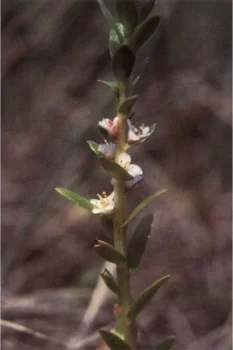
Sea Milkwort: A Tiny Coastal Native with Big Attitude
If you’ve ever wandered along a salt marsh or coastal wetland, you might have spotted a diminutive plant with succulent-like leaves hugging the ground. Meet sea milkwort (Glaux maritima), a plucky little perennial that thrives where most plants would throw in the towel. This hardy native forb has mastered the art of coastal living, making it both fascinating and challenging for home gardeners.
What Is Sea Milkwort?
Sea milkwort is a low-growing perennial forb native to Alaska, Canada, and much of the lower 48 states. Despite its name, it’s not actually related to the milkwort family – it’s a member of the primrose family that just happens to share a common name. This little plant rarely grows taller than about 0.9 feet, instead preferring to spread horizontally and form dense mats.
The plant produces small, white flowers in late spring that, while not particularly showy, add a delicate touch to its succulent-like foliage. The leaves are small, oval, and fleshy – perfectly adapted for life in salty conditions.
Where Does Sea Milkwort Grow?
This coastal native has an impressive range, growing naturally across much of North America from Alaska down through Canada and into many U.S. states including California, Colorado, Idaho, Maine, Maryland, Massachusetts, Minnesota, Montana, and many others. You’ll find it primarily in coastal salt marshes, alkaline wetlands, and other saline environments.
- Species observed
- No observations
The Rarity Factor
Before you get too excited about adding sea milkwort to your garden, there’s something important to know: this species is quite rare in some areas. In New Jersey, for example, it’s listed as Highlands Listed, SX.1, indicating significant conservation concern. If you’re interested in growing sea milkwort, it’s crucial to source it responsibly from reputable native plant nurseries that don’t collect from wild populations.
Why Grow Sea Milkwort?
Sea milkwort isn’t your typical garden center find, and honestly, that’s probably for the best. This specialized plant is perfect for very specific situations:
- Coastal properties with salt spray and alkaline soils
- Salt marsh restoration projects
- Specialized rock gardens with saline conditions
- Erosion control in challenging coastal environments
- Educational or demonstration gardens focused on wetland ecology
The plant offers some benefits to small pollinators, attracting flies and tiny bees to its modest white blooms. However, don’t expect it to be a pollinator powerhouse – think of it more as a supporting player in your coastal ecosystem.
Growing Conditions: Not for the Faint of Heart
Let’s be honest – sea milkwort is not an easy plant to grow, and it’s definitely not suitable for typical garden conditions. This plant has very specific needs:
- Soil: Requires alkaline to highly alkaline soils (pH 6.5-8.8) with good salt tolerance
- Moisture: Needs consistently high moisture – it’s classified as an obligate wetland plant in most regions
- Sun: Full sun only – shade intolerant
- Hardiness: Zones 3-8, can handle temperatures down to -33°F
- Salt tolerance: Thrives in saline conditions that would kill most plants
Planting and Care Tips
If you’re determined to try growing sea milkwort (and you have the right conditions), here’s what you need to know:
- Seeds: Can be propagated from seed, but expect slow establishment and low seed production
- Soil preparation: Ensure excellent drainage while maintaining consistent moisture – think salt marsh, not bog
- Fertilization: Keep it minimal – this plant prefers low-fertility conditions
- Patience: Growth rate is moderate, and the plant spreads slowly
- Commercial availability: Currently no known commercial sources, making it extremely difficult to obtain
The Bottom Line
Sea milkwort is undeniably cool – a tough little native that’s mastered one of the most challenging environments on Earth. But unless you have coastal property with naturally saline conditions, or you’re involved in salt marsh restoration, this probably isn’t the plant for you.
For most gardeners interested in native wetland plants, consider alternatives like blue flag iris, swamp milkweed, or cardinal flower, which are easier to grow and more widely available. But if you do have the perfect spot and can source it responsibly, sea milkwort offers a unique glimpse into the specialized world of halophytic (salt-loving) plants.
Remember, this little plant has been perfecting its coastal lifestyle for thousands of years – respect its needs, and it just might reward you with its quiet, resilient beauty.