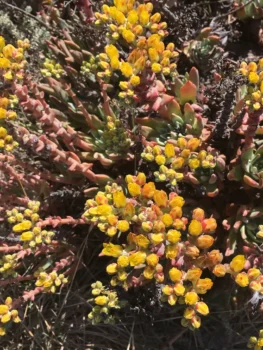
Sealettuce: A Coastal California Gem for Your Drought-Tolerant Garden
If you’re looking for a uniquely beautiful native succulent that practically thrives on neglect, let me introduce you to sealettuce (Dudleya caespitosa). This charming little coastal California native might just become your new favorite low-maintenance garden companion.
What is Sealettuce?
Sealettuce, scientifically known as Dudleya caespitosa, is a perennial succulent that belongs to the diverse Dudleya genus. Don’t let the name fool you – this isn’t something you’d want to toss in your salad! The sealettuce moniker likely comes from its coastal habitat and the lettuce-like appearance of its fleshy, overlapping leaves arranged in tight rosettes.
This native forb forms compact clusters of blue-green to gray-green rosettes, each measuring just a few inches across. When happy, sealettuce sends up slender flowering stalks topped with delicate white to pale yellow blooms that dance in the coastal breeze.
Where Does Sealettuce Call Home?
Sealettuce is exclusively native to California, where it clings to rocky coastal bluffs and clifftops with remarkable tenacity. You’ll find this tough little survivor thriving in some of the most challenging coastal environments, from Mendocino County down to San Luis Obispo County.
- Species observed
- No observations
Why Your Garden Will Love Sealettuce
Here’s where sealettuce really shines as a garden plant:
- Drought Champion: Once established, this plant laughs in the face of dry spells
- Low Maintenance: Perfect for busy gardeners or those who travel frequently
- Pollinator Friendly: The delicate flowers attract bees and butterflies
- Architectural Interest: Those geometric rosettes add structure to garden designs
- Native Pride: Supporting local ecosystems never goes out of style
Where to Use Sealettuce in Your Landscape
Sealettuce works beautifully in several garden settings:
- Rock Gardens: Its natural cliff-dwelling nature makes it perfect for rocky landscapes
- Succulent Gardens: Pairs wonderfully with other drought-tolerant natives
- Coastal Gardens: Thrives in salty, windy conditions that challenge other plants
- Container Gardens: Excellent drainage requirements make containers ideal
- Mediterranean-Style Landscapes: Fits perfectly with the low-water aesthetic
Growing Sealettuce Successfully
The secret to happy sealettuce is thinking like a coastal cliff: provide excellent drainage and don’t coddle it too much.
Ideal Growing Conditions
- Sunlight: Full sun to partial shade (morning sun is especially beneficial)
- Soil: Well-draining, sandy, or rocky soil is essential
- Water: Drought tolerant once established; water sparingly
- Hardiness: Best in USDA zones 9-11
Planting and Care Tips
Planting: Choose a spot with excellent drainage – this cannot be overstated! If your soil doesn’t drain well, consider raised beds or containers. Plant in fall for best establishment.
Watering: Water occasionally during the first year to help establishment, then reduce to minimal supplemental watering. Overwatering is the quickest way to lose your sealettuce.
Fertilizing: These plants evolved in nutrient-poor soils, so skip the fertilizer. Rich soils can actually harm them.
Maintenance: Remove spent flower stalks if desired, but otherwise, let this plant do its thing.
A Word About Conservation
Sealettuce has a somewhat uncertain conservation status, which means we should be thoughtful about how we source it. Always purchase from reputable native plant nurseries that propagate their own stock rather than collecting from wild populations. Many botanical gardens and native plant societies also hold plant sales featuring responsibly sourced natives.
Is Sealettuce Right for Your Garden?
If you’re in the right climate zone (9-11) and can provide excellent drainage, sealettuce makes an excellent addition to water-wise gardens. It’s particularly perfect for gardeners who want to support native wildlife while maintaining a low-maintenance landscape.
However, if you’re outside its hardiness range or struggle with soggy soils, you might want to look for other drought-tolerant natives better suited to your conditions.
Sealettuce proves that sometimes the most beautiful garden additions are the ones that ask for the least – just good drainage, some sunshine, and the freedom to be their resilient, coastal selves.