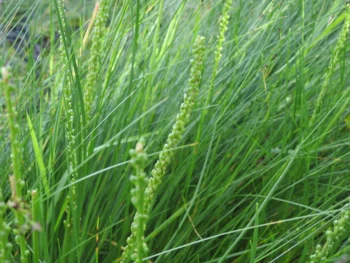
Seaside Arrowgrass: A Native Wetland Specialist for Your Water Garden
If you’re looking to create an authentic wetland habitat or restore a natural water feature, seaside arrowgrass (Triglochin maritima) might just be the unassuming native plant you’ve been searching for. This grass-like perennial isn’t your typical garden showstopper, but it plays a crucial role in North American wetland ecosystems and could be perfect for the right gardening situation.
What is Seaside Arrowgrass?
Seaside arrowgrass is a perennial grass-like plant that belongs to the arrow-grass family (Juncaginaceae). Don’t let the name fool you – while it’s called seaside, this adaptable native actually grows in various wetland habitats far from the ocean. The plant produces narrow, linear leaves and tall spikes of small, greenish flowers that may not win any beauty contests but serve important ecological functions.
Where Does It Grow Naturally?
This remarkable plant has one of the most extensive native ranges in North America. Seaside arrowgrass is native to Alaska, Canada, and the lower 48 states, with populations found from coast to coast. You can find it growing naturally in states ranging from California and Washington to Maine and Florida, and everywhere in between – including Alberta, British Columbia, Manitoba, Ontario, and many other provinces and territories.
- Species observed
- No observations
The Wetland Specialist
Here’s where seaside arrowgrass gets really interesting: it’s what botanists call an obligate wetland species across all regions of North America. This means it almost always occurs in wetlands and requires consistently wet conditions to thrive. If you’re planning a rain garden, bog garden, or wetland restoration project, this plant could be exactly what you need.
Important Conservation Note
Before you rush out to find seaside arrowgrass, there’s something important to know: in New Jersey, this plant is listed as Endangered with special protections in the Pinelands and Highlands regions. If you’re interested in growing this species, make sure you source it responsibly from reputable native plant nurseries rather than collecting from wild populations.
Is Seaside Arrowgrass Right for Your Garden?
Seaside arrowgrass isn’t for every garden, but it might be perfect for yours if you have:
- A naturally wet area that stays consistently moist
- A constructed wetland or bog garden
- A restoration project near ponds, streams, or marshes
- Salt-tolerant landscaping needs (it handles saline conditions well)
- An interest in supporting native ecosystem restoration
Growing Conditions and Care
If you decide seaside arrowgrass is right for your project, here’s what it needs to succeed:
Water Requirements: This is non-negotiable – seaside arrowgrass needs perpetually wet to saturated soil. Think bog conditions, not just moist garden soil.
Sunlight: Full sun to partial shade works well, though it tends to prefer sunny locations in its natural habitat.
Soil: Adaptable to various soil types as long as they stay wet. It can handle both freshwater and somewhat saline conditions.
Climate: Extremely cold-hardy, thriving in USDA hardiness zones 2-9.
Challenges to Consider
Let’s be honest – seaside arrowgrass isn’t the easiest plant to establish in a typical garden setting. It requires very specific conditions that most residential landscapes simply don’t provide. Unless you have a natural wetland area or are willing to create and maintain consistently saturated conditions, this plant will likely struggle.
Additionally, as a wind-pollinated species, it doesn’t offer the same pollinator benefits as many other native plants, though it does provide habitat and food sources for wetland wildlife.
The Bottom Line
Seaside arrowgrass is a fascinating native plant with an impressive range and important ecological role. While it won’t work for most traditional gardens, it’s invaluable for wetland restoration, specialized water gardens, and naturalized landscapes with appropriate conditions. If you have the right wet habitat and can source plants responsibly, seaside arrowgrass can be a meaningful addition to your native plant collection.
Just remember – this is a plant for specialized situations, not general garden use. But for those special wetland projects, few plants can match its authenticity and ecological value as a true North American native.