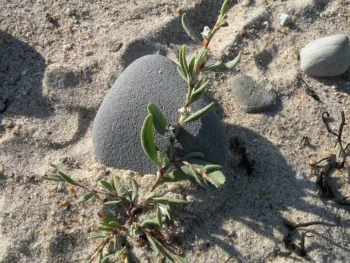
Seaside Knotweed: A Rare Coastal Native Worth Protecting
If you’re passionate about coastal gardening and native plant conservation, seaside knotweed (Polygonum glaucum) might just capture your heart. This unassuming little herb may not be the showiest plant in your garden, but it’s got character, resilience, and a story that makes it truly special.
What Makes Seaside Knotweed Special?
Seaside knotweed is a native forb that calls the Atlantic coast home, stretching from Massachusetts down to Florida. You’ll find it naturally growing in Connecticut, Delaware, Florida, Georgia, Maryland, Massachusetts, New Jersey, New York, North Carolina, Rhode Island, South Carolina, and Virginia. This hardy little plant has adapted to some pretty tough conditions along our coastlines.
- Species observed
- No observations
What sets this plant apart is its beautiful glaucous (that’s botanist-speak for bluish-green) foliage that gives it an almost silvery appearance. The small white to pinkish flowers may be tiny, but they cluster together to create a delicate, understated beauty that’s perfectly at home in coastal landscapes.
A Plant That Needs Our Help
Here’s where things get serious, though. Seaside knotweed is considered globally vulnerable with a conservation status of S3. In New Jersey, it’s actually listed as endangered. This means that while you might be tempted to dig some up from the wild (please don’t!), this plant really needs our help to survive.
If you’re considering adding seaside knotweed to your garden, make sure you’re getting it from a reputable native plant nursery that sources their material responsibly. By growing this rare native, you’re actually participating in conservation efforts – pretty cool, right?
Is Seaside Knotweed Right for Your Garden?
This plant isn’t for everyone, and that’s okay! Seaside knotweed really shines in specific situations:
- Coastal gardens where salt spray is a concern
- Sandy, well-draining soils
- Areas that need erosion control
- Conservation-focused native plant gardens
- Low-maintenance landscapes
The plant typically grows as both an annual and perennial (it can vary depending on conditions), and it’s what botanists call a forb – basically, it’s a non-woody plant that dies back to the ground each year but may return from its roots.
Growing Conditions and Care
One of the best things about seaside knotweed is that it’s pretty low-maintenance once you understand what it needs. This plant has evolved to handle some tough coastal conditions, so it’s quite forgiving if you can mimic its natural habitat.
It prefers full sun and sandy, well-draining soils – think beach-like conditions. The plant is classified as Facultative Upland across its range, meaning it usually grows in non-wetland areas but can tolerate some moisture. It’s quite drought-tolerant once established and can handle salt spray like a champ.
For USDA hardiness zones, you’ll want to stick to zones 6-9, particularly in coastal areas where the plant naturally occurs.
Wildlife and Pollinator Benefits
While seaside knotweed might look modest, its small flowers are actually valuable resources for pollinators. The clusters of tiny blooms attract small bees, beneficial insects, and other pollinators who appreciate having a reliable food source in challenging coastal environments.
The Bottom Line
Seaside knotweed might not be the star of your garden show, but it’s definitely worth considering if you’re passionate about native plants, coastal gardening, or conservation. Just remember – this is a rare plant that needs our protection, so always source it responsibly from reputable native plant nurseries.
If you can provide the right sandy, coastal conditions and you’re committed to conservation, seaside knotweed could be a wonderful addition to your native plant collection. Plus, you’ll have a great conversation starter about the importance of protecting our rare native flora!