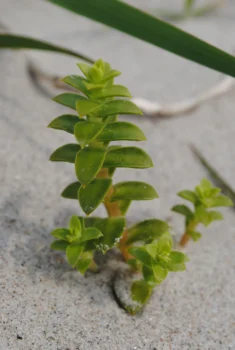
Seaside Sandplant: A Rare Coastal Native Worth Protecting
If you’re lucky enough to live along the northeastern coast and have been searching for a truly unique native groundcover, let me introduce you to seaside sandplant (Honckenya peploides robusta). This unassuming little perennial might not win any beauty contests, but it’s a coastal champion that deserves a spot in the right garden – with an important caveat about its conservation status.
What Makes Seaside Sandplant Special?
Seaside sandplant is a low-growing, mat-forming succulent that’s perfectly adapted to life by the sea. This hardy forb spreads via underground rhizomes, creating dense carpets of fleshy, oval leaves that can handle whatever Mother Nature throws at them – salt spray, sandy soil, and howling coastal winds included.
During summer, small white flowers peek out from the foliage, adding a delicate touch to this otherwise tough-as-nails plant. While it won’t provide the showstopping blooms of more popular perennials, its subtle charm and incredible resilience make it a valuable addition to coastal landscapes.
Where You’ll Find This Coastal Native
Seaside sandplant is native to northeastern North America, naturally occurring along sandy beaches and coastal dunes. You can find it growing wild from Labrador and Newfoundland down through the Maritime provinces of Canada, and in several northeastern U.S. states including Maine, Massachusetts, New Hampshire, Connecticut, New York, New Jersey, Delaware, Maryland, and Virginia.
- Species observed
- No observations
A Word of Caution: Rarity Status
Important conservation note: Before you get too excited about adding seaside sandplant to your garden, you need to know that this species is considered endangered in New Jersey, where it holds an S1 rarity ranking and is listed for protection in both the Pinelands and Highlands regions. This means it’s critically imperiled in that state.
If you’re interested in growing seaside sandplant, please only source it from reputable native plant nurseries that propagate their own stock rather than collecting from wild populations. Better yet, consider supporting local conservation efforts that protect existing coastal habitats where this species grows naturally.
Growing Seaside Sandplant Successfully
For those who can responsibly source this rare beauty, seaside sandplant is surprisingly easy to grow – as long as you can mimic its preferred beachside conditions.
Ideal Growing Conditions
- Soil: Sandy, extremely well-draining soil (think beach sand!)
- Sun exposure: Full sun
- Moisture: Drought tolerant once established, but appreciates occasional watering
- Salt tolerance: Excellent – perfect for seaside gardens
- USDA Hardiness Zones: 3-7
Planting and Care Tips
- Plant in spring after the last frost
- Ensure excellent drainage – this plant will rot in heavy, wet soils
- Space plants 12-18 inches apart to allow for spreading
- Water regularly the first season to establish, then reduce watering
- No fertilization needed – it actually prefers poor, sandy soils
- Minimal maintenance required once established
Perfect Garden Roles
Seaside sandplant excels in specific garden situations:
- Coastal gardens: Natural choice for beachfront properties
- Rock gardens: Provides interesting texture among rocks and gravel
- Erosion control: Helps stabilize sandy slopes and dunes
- Xeriscaping: Excellent drought-tolerant groundcover
- Beach restoration projects: Helps restore native dune ecosystems
Wildlife and Pollinator Benefits
While small, the white flowers of seaside sandplant do attract various pollinators, particularly small native bees and beneficial insects. The dense mat it forms can also provide shelter for small coastal wildlife and help stabilize important dune habitats that many shorebirds depend on for nesting.
The Bottom Line
Seaside sandplant is a fascinating native that deserves respect and protection. If you have the right coastal conditions and can source it responsibly, it makes an excellent low-maintenance groundcover that connects your garden to the natural heritage of northeastern shores. Just remember – with great rarity comes great responsibility. Consider this plant not just as a garden addition, but as a conservation opportunity to help preserve a piece of our coastal ecosystem.
For most gardeners, supporting organizations that protect coastal habitats where seaside sandplant grows naturally might be the best way to help this endangered beauty thrive for future generations.