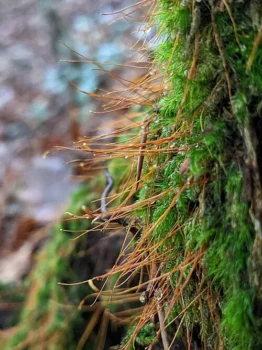
Seliger’s Herzogiella Moss: A Delicate Native Ground Cover for Shade Gardens
If you’ve ever wandered through a northeastern woodland and noticed delicate, feathery patches of green carpeting fallen logs or shaded rock faces, you might have encountered Seliger’s herzogiella moss (Herzogiella seligeri). This charming native bryophyte brings a touch of forest magic to shade gardens and natural landscapes.
What Is Seliger’s Herzogiella Moss?
Seliger’s herzogiella moss is a small, terrestrial bryophyte native to North America. Like all mosses, it’s a non-flowering plant that reproduces through spores rather than seeds. This particular species has a delicate, almost feathery appearance and tends to form thin, spreading mats on various surfaces.
You might also see this moss referenced by several scientific synonyms in older botanical literature, including Isopterygium seligeri and Plagiothecium seligeri, but Herzogiella seligeri is the currently accepted name.
Where Does It Grow Naturally?
This moss is native to North America, with its primary range concentrated in the northeastern regions, including eastern Canada and the northeastern United States. It thrives in the cool, moist conditions typical of these temperate forest ecosystems.
Is It Beneficial for Your Garden?
While Seliger’s herzogiella moss won’t attract pollinators like flowering plants do, it offers several unique benefits to shade gardeners:
- Natural ground cover: Creates beautiful, low-maintenance carpets in shaded areas where grass struggles
- Moisture retention: Helps maintain soil moisture and prevents erosion
- Wildlife habitat: Provides shelter for tiny invertebrates and contributes to forest floor ecosystems
- Aesthetic appeal: Adds texture and year-round green interest to woodland gardens
- Air purification: Like all mosses, it helps clean the air by trapping dust and pollutants
Perfect Garden Settings
This moss is ideally suited for:
- Shade and woodland gardens
- Rock gardens with consistent moisture
- Areas around water features
- Natural landscapes that mimic forest environments
- Spaces between stepping stones or pavers in shaded areas
How to Identify Seliger’s Herzogiella Moss
Look for these characteristics when trying to identify this species:
- Fine, feathery appearance with delicate branching patterns
- Forms thin, spreading mats rather than dense cushions
- Often found growing on decaying wood, rocks, or soil in shaded locations
- Bright to medium green coloration
- Prefers consistently moist but not waterlogged conditions
Growing Conditions and Care
If you’re lucky enough to have this moss establish naturally in your garden, here’s what it needs to thrive:
- Light: Shade to partial shade; direct sunlight will quickly dry it out
- Moisture: Consistent humidity and regular moisture without waterlogging
- Soil: Prefers slightly acidic conditions; thrives on organic matter like decaying wood
- Climate: Hardy in USDA zones 3-7, matching its native range
- Air circulation: Benefits from gentle air movement to prevent stagnation
Important Conservation Note
Seliger’s herzogiella moss has a conservation status that indicates some level of concern about its populations. If you’re interested in encouraging this species in your garden, focus on creating the right habitat conditions rather than transplanting from wild populations. Never collect mosses from public lands or areas where they appear scarce.
The Bottom Line
While you can’t exactly plant Seliger’s herzogiella moss like you would a perennial, you can certainly create conditions that welcome it into your shade garden. By maintaining consistently moist, shaded areas with good air circulation, you might just find this delicate native moss making itself at home among your woodland plants. It’s a perfect example of how the smallest garden residents can add the biggest charm to our outdoor spaces.