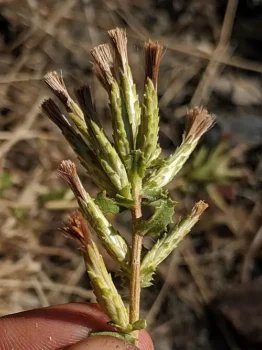
Serpentine Bristleweed: A Rare California Native Worth Growing Responsibly
Meet serpentine bristleweed (Hazardia stenolepis), a charming little shrub that’s as unique as its name suggests. This California native has carved out a very specific niche in the Golden State’s diverse plant kingdom, and while it might not be the showiest plant in your garden, it offers something special for those who appreciate the subtle beauty of native flora.
What Makes Serpentine Bristleweed Special?
Serpentine bristleweed is a perennial shrub that typically stays compact, making it perfect for smaller spaces. True to its name, this plant has a particular fondness for serpentine soils – those mineral-rich, often challenging growing conditions that many plants can’t handle. It’s like the plant equivalent of someone who thrives on a difficult crossword puzzle while others struggle with the Sunday comics.
The plant produces clusters of small, bright yellow daisy-like flowers that may be modest in size but pack a punch when it comes to attracting pollinators. Its narrow, bristle-like leaves give it a delicate, almost feathery appearance that adds interesting texture to the landscape.
Where You’ll Find It Growing Wild
This special little shrub is native to California and has a fairly limited natural range. You’ll find it growing wild in areas with serpentine soils, particularly around the San Francisco Bay Area and nearby regions. It’s one of those plants that has learned to thrive where others can’t, making it a true California original.
- Species observed
- No observations
A Word About Rarity
Here’s something important to know: serpentine bristleweed has a conservation status that suggests it may be uncommon in the wild. If you’re thinking about adding this plant to your garden (and we think you should consider it!), please make sure you source it responsibly from reputable native plant nurseries. Never collect plants from the wild – let’s keep the natural populations healthy for future generations to enjoy.
Why Grow Serpentine Bristleweed?
You might be wondering why you’d want to grow a plant with such specific requirements. Here are some compelling reasons:
- It’s incredibly drought tolerant once established – perfect for water-wise gardening
- The yellow flowers attract native bees, butterflies, and other beneficial pollinators
- It thrives in challenging soil conditions where other plants struggle
- Low maintenance once it’s settled in
- Adds unique texture and form to native plant gardens
- Supports local ecosystem health by providing habitat for native insects
Perfect Garden Settings
Serpentine bristleweed shines in several garden styles:
- Native California gardens
- Rock gardens and gravel gardens
- Mediterranean-style landscapes
- Drought-tolerant and low-water gardens
- Pollinator gardens focused on native species
It works particularly well as a companion to other California natives that enjoy similar growing conditions, such as manzanitas, ceanothus, and native bunch grasses.
Growing Conditions and Care
The key to success with serpentine bristleweed is understanding its preferences:
Sunlight: Full sun is essential – this plant wants at least 6-8 hours of direct sunlight daily.
Soil: Well-draining soil is absolutely critical. While it naturally grows in serpentine soils, it can adapt to other well-draining soil types. Heavy clay or poorly draining soils are a no-go.
Water: Drought tolerant once established, but provide regular water during the first growing season. After that, occasional deep watering during prolonged dry periods is usually sufficient.
Climate: Hardy in USDA zones 8-10, making it suitable for most of California and similar Mediterranean climates.
Planting and Care Tips
Getting your serpentine bristleweed off to a good start is fairly straightforward:
- Plant in fall or early spring for best establishment
- Ensure excellent drainage – consider creating a raised planting area if your soil is heavy
- Space plants appropriately to allow for air circulation
- Water regularly during the first year, then reduce frequency
- Light pruning after flowering can help maintain shape
- Avoid fertilizing – this plant prefers lean soils
The Bottom Line
Serpentine bristleweed might not be the most glamorous plant in the native plant world, but it’s certainly one of the most interesting. If you have the right growing conditions and appreciate plants with character, this little shrub could be a wonderful addition to your garden. Just remember to source it responsibly and give it the well-draining, sunny spot it craves. Your local pollinators will thank you, and you’ll have the satisfaction of growing a true California original.