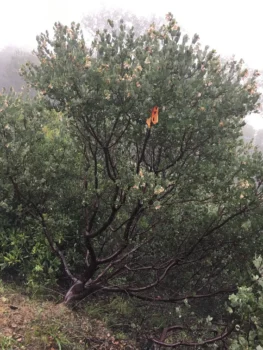
Serpentine Manzanita: A Rare California Native Worth Growing Responsibly
If you’re looking for a drought-tolerant shrub that brings year-round beauty to your California garden, meet the serpentine manzanita (Arctostaphylos obispoensis). This charming native plant might just be the perfect addition to your water-wise landscape – but there’s an important catch we need to discuss first.
A True California Original
Serpentine manzanita is as California as it gets. This perennial shrub is native to the lower 48 states, specifically calling California home. You’ll find it naturally growing in the Golden State, where it has adapted to thrive in some pretty challenging conditions that would make other plants throw in the towel.
- Species observed
- No observations
Important Conservation Note
Before we dive into all the wonderful reasons to grow this plant, let’s talk about something crucial: serpentine manzanita has a Global Conservation Status of S3?, which means its conservation status is somewhat undefined but suggests it may be uncommon. This makes responsible sourcing absolutely essential. If you decide to add this beauty to your garden, please ensure you’re purchasing from reputable native plant nurseries that propagate their plants rather than collecting from wild populations.
What Makes Serpentine Manzanita Special
This multi-stemmed woody shrub typically stays under 13-16 feet tall, making it perfect for most residential landscapes. Don’t let its modest size fool you – it packs a serious aesthetic punch throughout the year.
In winter and early spring, serpentine manzanita produces clusters of small, bell-shaped flowers that range from white to soft pink. These delicate blooms create a stunning contrast against the plant’s evergreen foliage and attractive red-brown bark that peels in interesting patterns, giving your garden texture and visual interest even in the dormant season.
Perfect for Water-Wise Gardens
If you’re tired of babying thirsty plants through California’s dry summers, serpentine manzanita might become your new best friend. This tough little shrub is naturally drought-tolerant and actually prefers minimal water once established. It’s ideally suited for:
- Mediterranean-style landscapes
- Native plant gardens
- Rock gardens and slopes
- Low-maintenance drought-tolerant designs
A Pollinator Magnet
Those early-season flowers aren’t just pretty – they’re a vital nectar source when many other plants are still sleeping. Bees, butterflies, and hummingbirds will thank you for providing this early feast, making serpentine manzanita an excellent choice for pollinator-friendly gardens.
Growing Conditions and Care
Serpentine manzanita thrives in USDA hardiness zones 8-10, making it perfect for most of California’s climate zones. Here’s what this easy-going native prefers:
- Sunlight: Full sun to partial shade
- Soil: Well-draining soil (it especially loves serpentine or rocky soils)
- Water: Drought-tolerant once established; avoid summer irrigation
- Maintenance: Low maintenance with minimal pruning needed
Planting and Care Tips
Fall is the ideal time to plant your serpentine manzanita, giving it time to establish before the heat of summer. Plant it in well-draining soil and water regularly during its first year while the root system develops. After that, step back and let this independent beauty do its thing.
One of the most important care tips: resist the urge to overwater! Many manzanitas actually suffer from too much summer water, so once established, let nature handle the irrigation duties.
If you need to prune, do so lightly after flowering to maintain the plant’s natural shape. Heavy pruning can stress the plant and reduce next year’s flower display.
The Bottom Line
Serpentine manzanita offers California gardeners a beautiful, low-maintenance native option that supports local wildlife while conserving water. Its year-round appeal, drought tolerance, and pollinator benefits make it a fantastic addition to sustainable landscapes.
Just remember: with great beauty comes great responsibility. Always source your plants from reputable nurseries that grow their stock rather than wild-collecting, helping ensure this special native continues to thrive both in gardens and in its natural habitat for generations to come.