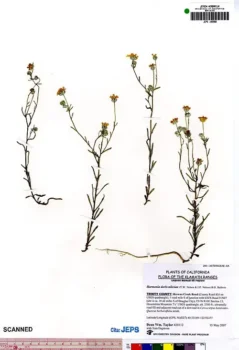
Serpentine Tarweed: A Rare California Native Worth Protecting
Meet the serpentine tarweed (Harmonia dorisnilesiae), one of California’s most elusive native wildflowers. This little-known annual forb might not be gracing garden centers anytime soon, but it deserves our attention for reasons that go far beyond typical gardening advice.
What Makes Serpentine Tarweed Special?
Serpentine tarweed belongs to the sunflower family and lives life in the fast lane as an annual plant, completing its entire lifecycle in just one growing season. As a forb—essentially a non-woody flowering plant—it lacks the sturdy stems of shrubs but makes up for it with its unique ecological niche.
You might also encounter this plant listed under its scientific synonym, Madia doris-nilesiae, in older botanical references.
Where Does It Call Home?
This California endemic has chosen some pretty exclusive real estate. Serpentine tarweed grows only in the Golden State, where it has adapted to some of the most challenging soil conditions you can imagine—serpentine soils that would make most plants throw in the trowel.
- Species observed
- No observations
A Conservation Story Worth Telling
Here’s where things get serious: serpentine tarweed carries a Global Conservation Status of S2, meaning it’s imperiled. With typically only 6 to 20 known occurrences and possibly fewer than 3,000 individual plants remaining, this species teeters on the edge of rarity.
What makes a plant this rare? Usually, it’s a combination of highly specific habitat requirements and limited distribution. Serpentine tarweed has evolved to thrive in serpentine soils—a unique geological formation that’s toxic to most plants but provides a specialized niche for adapted species.
Should You Grow Serpentine Tarweed?
The short answer: only if you can source it responsibly and have the right conditions. Given its imperiled status, this isn’t a plant to casually add to your shopping list. If you’re seriously interested in growing serpentine tarweed, here’s what you need to know:
- Work only with reputable native plant nurseries or seed suppliers who use ethically collected, locally sourced material
- Never collect seeds or plants from wild populations
- Ensure you can replicate its specialized growing requirements
- Consider it a conservation project rather than typical gardening
The Growing Challenge
Unfortunately, detailed cultivation information for serpentine tarweed remains limited, likely due to its rarity and specialized habitat needs. What we do know is that it requires the unique mineral composition found in serpentine soils, which presents a significant challenge for home gardeners.
As an annual, it would need to reseed itself each year to maintain a population in your garden. Without extensive research into its specific germination and growing requirements, successful cultivation remains uncertain.
Supporting Conservation Instead
Rather than attempting to grow this rare species, consider supporting its conservation in other ways:
- Support organizations working to protect California’s serpentine habitats
- Choose other native California wildflowers that offer similar ecological benefits without conservation concerns
- Learn about and advocate for rare plant protection in your area
- Visit and appreciate serpentine tarweed in its natural habitat (if you can find it!)
The Bigger Picture
Serpentine tarweed represents something bigger than just another pretty wildflower. It’s a reminder that California’s native plant communities include incredibly specialized species that have evolved unique solutions to challenging environments. While we might not be able to easily welcome this particular plant into our gardens, we can celebrate its existence and work to ensure it doesn’t disappear from the wild.
Sometimes the most valuable plants are the ones we admire from a distance while working to protect their natural homes.