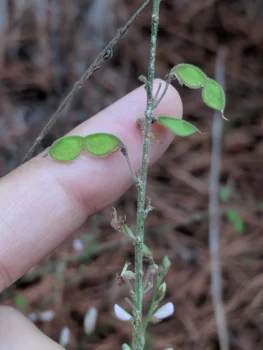
Sessileleaf Ticktrefoil: A Hidden Gem for Wildlife-Friendly Gardens
If you’re looking to add a touch of native charm to your landscape while supporting local wildlife, sessileleaf ticktrefoil (Desmodium sessilifolium) might just be the unsung hero your garden needs. This perennial forb may not win any flashy flower contests, but what it lacks in showiness, it more than makes up for in ecological value and easy-going nature.
What is Sessileleaf Ticktrefoil?
Sessileleaf ticktrefoil is a native North American perennial that belongs to the legume family. True to its name, this herbaceous plant produces distinctive three-part leaves that sit directly on the stem without stalks (hence sessile). The plant typically grows 2-4 feet tall and spreads about 1-2 feet wide, making it a perfect mid-border addition to naturalized gardens.
You might also encounter this plant listed under its botanical synonym Meibomia sessilifolia in older gardening references, but Desmodium sessilifolium is the current accepted name.
Where Does It Call Home?
This native beauty has quite an impressive range across North America. You’ll find sessileleaf ticktrefoil naturally occurring in 28 states stretching from the Atlantic coast to the Great Plains, plus Ontario, Canada. Its distribution includes Alabama, Arkansas, Connecticut, Florida, Georgia, Illinois, Indiana, Iowa, Kansas, Kentucky, Louisiana, Maryland, Massachusetts, Michigan, Mississippi, Missouri, Nebraska, New Jersey, North Carolina, Ohio, Oklahoma, Pennsylvania, Rhode Island, South Carolina, Tennessee, Texas, and Virginia.
- Species observed
- No observations
A Conservation Consideration
Before you rush out to find this plant, there’s something important to know: sessileleaf ticktrefoil is considered endangered in New Jersey, where it’s listed as S1 (critically imperiled) and appears on both Pinelands and Highlands protected species lists. If you’re gardening in New Jersey or anywhere else where this plant might be rare, please ensure you source your plants responsibly from reputable native plant nurseries rather than collecting from wild populations.
Why Choose Sessileleaf Ticktrefoil?
While it might not be the flashiest plant in your garden, sessileleaf ticktrefoil offers several compelling reasons to include it in your landscape:
- Native habitat support: As a native plant, it provides food and shelter that local wildlife have evolved to depend on
- Pollinator magnet: The small pink to purple flowers attract bees, butterflies, and other beneficial insects
- Low maintenance: Once established, it’s quite drought tolerant and requires minimal care
- Nitrogen fixing: Like other legumes, it helps improve soil fertility naturally
- Interesting seed pods: The segmented pods add textural interest and provide food for birds
Perfect Garden Spots
Sessileleaf ticktrefoil shines in naturalized settings where it can blend with other native plants. Consider it for:
- Woodland edge gardens
- Prairie restoration projects
- Wildlife habitat gardens
- Native plant collections
- Naturalized meadow areas
It’s particularly well-suited for gardeners who prefer a more relaxed, natural aesthetic over formal landscapes.
Growing Conditions and Care
One of the best things about sessileleaf ticktrefoil is its adaptable nature. This hardy perennial thrives in USDA zones 3-9, making it suitable for most of the continental United States.
Light Requirements
This flexible plant adapts well to various light conditions, from partial shade to full sun. In its native habitat, you’ll often find it at woodland edges where it receives dappled sunlight.
Soil Preferences
Sessileleaf ticktrefoil isn’t particularly fussy about soil, but it performs best in well-drained conditions. It can tolerate a range of soil types and, once established, shows good drought tolerance.
Maintenance
This is definitely a plant it and forget it kind of perennial. After the first year, it typically needs very little attention. The plant may self-seed in favorable conditions, which can be a bonus if you want to naturalize an area or a concern if you prefer tighter garden control.
Planting Tips for Success
- Timing: Plant in spring after the last frost or in early fall
- Spacing: Allow 12-18 inches between plants
- Watering: Water regularly the first year to establish roots, then reduce frequency
- Soil prep: No special soil amendments needed – this plant appreciates average garden conditions
Is This Plant Right for Your Garden?
Sessileleaf ticktrefoil is an excellent choice if you’re interested in supporting native ecosystems, creating wildlife habitat, or establishing low-maintenance naturalized areas. However, it might not be the best fit if you prefer formal gardens with controlled, predictable growth patterns, or if you’re looking for showy, ornamental flowers.
This native perennial represents the quiet beauty of North American flora – not flashy, but dependable, beneficial, and perfectly adapted to its environment. For gardeners committed to ecological gardening and supporting local wildlife, sessileleaf ticktrefoil offers an authentic piece of native habitat that asks for little but gives back plenty.