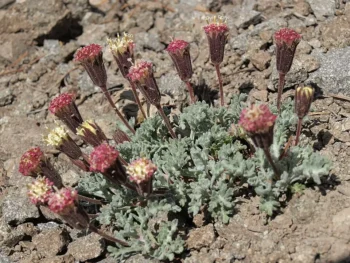
Shasta Chaenactis: A Rare California Native Worth Protecting in Your Garden
If you’re looking to add a touch of California’s wild beauty to your garden while supporting conservation efforts, the Shasta chaenactis (Chaenactis suffrutescens) might be exactly what you need. This charming little perennial shrub brings delicate flowers and silvery foliage to gardens, but there’s something special you should know before adding it to your wishlist.
What Makes Shasta Chaenactis Special
Don’t let its small stature fool you – this native California perennial packs a punch in the charm department. Shasta chaenactis typically grows as a compact, low-growing shrub that stays well-behaved at under 1.5 feet tall, never getting taller than 3 feet even at full maturity. Its silvery-green foliage provides year-round interest, while clusters of small, cream-colored to white flower heads create a delicate display that pollinators absolutely adore.
A True California Native
This lovely plant is a true California original, endemic to the Golden State and found specifically in the northern California mountains. As a native species, it’s perfectly adapted to local conditions and plays an important role in supporting the ecosystem.
- Species observed
- No observations
Important Conservation Note
Here’s where things get serious for a moment. Shasta chaenactis has a Global Conservation Status of S3, meaning it’s considered vulnerable in the wild. With typically only 21 to 100 occurrences and between 3,000 to 10,000 individuals remaining, this plant is quite rare. If you decide to grow it, please only purchase from reputable nurseries that ethically propagate their plants rather than wild-collect them.
Why Gardeners Love This Plant
Beyond its conservation value, Shasta chaenactis offers several practical benefits for gardeners:
- Drought tolerant once established, perfect for water-wise gardening
- Attracts native bees and butterflies to your garden
- Low maintenance and compact size
- Excellent for rock gardens and dry gardens
- Beautiful silvery foliage provides texture contrast
- Thrives in USDA hardiness zones 8-10
Perfect Garden Settings
This petite native shines in several garden styles. It’s particularly well-suited for rock gardens, where its compact form and drought tolerance make it a natural fit. Xeriscape gardens benefit from its water-wise nature, while native plant gardens gain an authentic California mountain species. The plant also works beautifully as a ground cover in dry, sunny spots where other plants might struggle.
Growing Shasta Chaenactis Successfully
The good news is that once you find responsibly sourced plants, Shasta chaenactis isn’t particularly fussy to grow. Here’s how to keep it happy:
- Timing: Plant in fall for best establishment
- Location: Choose a spot with full sun and excellent drainage
- Soil: Well-draining soil is crucial – this plant hates wet feet
- Watering: Water regularly the first year, then reduce to minimal supplemental irrigation
- Maintenance: Very low maintenance once established; avoid overwatering
Supporting Pollinators and Wildlife
One of the best reasons to grow Shasta chaenactis is its value to local wildlife. Native bees and butterflies are drawn to its flowers, making your garden a haven for these important pollinators. By growing native plants like this one, you’re creating habitat and food sources that have co-evolved with local wildlife.
The Bottom Line
Shasta chaenactis is a wonderful addition to California gardens, offering beauty, low maintenance, and ecological benefits. However, its vulnerable conservation status means we need to be responsible gardeners. If you choose to grow this special plant, make sure you’re purchasing from ethical sources that propagate rather than wild-collect their stock. By doing so, you’ll be supporting both your local ecosystem and conservation efforts – now that’s what we call a win-win!