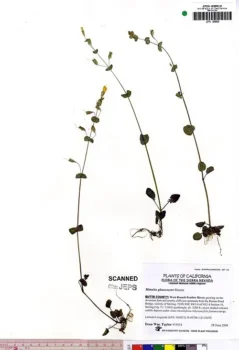
Shieldbract Monkeyflower: A Rare California Wetland Gem
Meet the shieldbract monkeyflower (Mimulus glaucescens), a charming little wildflower that’s as particular about its living conditions as it is beautiful. This California native might be small in stature, but it packs a big punch when it comes to wetland restoration and specialized water gardening.
What Makes This Monkeyflower Special?
The shieldbract monkeyflower is a delightful annual forb that produces cheerful yellow blooms reminiscent of tiny snapdragons. As its scientific name suggests, this herbaceous plant lacks woody tissue and completes its entire life cycle in just one growing season. Don’t let its annual nature fool you though – when conditions are right, it can create stunning displays in wetland areas.
This little beauty is part of the beloved monkeyflower family, and you might occasionally see it listed under its synonym Mimulus guttatus var. glaucescens in older botanical references.
Where Does It Call Home?
The shieldbract monkeyflower is a true California native, found exclusively within the Golden State’s borders. This endemic species has adapted perfectly to California’s unique wetland environments, making it a fantastic choice for gardeners looking to create authentic native landscapes.
- Species observed
- No observations
A Word of Caution: Rarity Matters
Here’s something important every responsible gardener should know: the shieldbract monkeyflower has a Global Conservation Status of S3, meaning it’s considered vulnerable. With typically only 21 to 100 occurrences and between 3,000 to 10,000 individuals in the wild, this plant needs our protection.
If you’re considering adding this beauty to your garden, please only source seeds or plants from reputable native plant nurseries that practice ethical collection methods. Never collect from wild populations.
Growing Conditions: It’s All About the Water
The shieldbract monkeyflower is what botanists call an obligate wetland plant, which is a fancy way of saying it absolutely must have wet feet to thrive. This applies whether you’re gardening in California’s arid regions or the western mountains and coastal areas.
Here’s what this water-loving plant needs to flourish:
- Consistently moist to wet soil conditions
- Full sun to partial shade
- USDA hardiness zones 8-10
- Well-draining soil that never dries out (think bog-like conditions)
Perfect Garden Settings
The shieldbract monkeyflower isn’t your typical backyard flower, but it shines in specialized garden settings:
- Rain gardens: Perfect for managing stormwater runoff
- Bog gardens: Adds native color to water features
- Wetland restoration projects: Helps restore California’s native ecosystems
- Conservation gardens: Showcases rare native plants
Wildlife and Pollinator Benefits
Like many monkeyflowers, the shieldbract variety attracts small pollinators including native bees. Its bright yellow blooms serve as landing pads for these important garden visitors, making it a valuable addition to pollinator-friendly landscapes.
Planting and Care Tips
Growing shieldbract monkeyflower successfully requires understanding its unique needs:
- Start from seed: This annual is typically grown from seed sown in fall or early spring
- Keep it wet: Never allow the soil to dry out – think swamp rather than garden bed
- Be patient: As an annual, it will complete its life cycle in one season but may self-seed under ideal conditions
- Minimal fertilization: Wetland plants typically don’t need rich soils
Is This Plant Right for Your Garden?
The shieldbract monkeyflower is definitely not for everyone, and that’s okay! This specialized plant is perfect for gardeners who:
- Are creating wetland or bog gardens
- Want to support native California ecosystems
- Have consistently wet areas in their landscape
- Are interested in conservation gardening
However, if you’re looking for a low-maintenance, drought-tolerant plant, you might want to consider other California natives that are better suited to drier conditions.
The Bottom Line
The shieldbract monkeyflower offers a unique opportunity to grow a rare California native while supporting wetland ecosystems and pollinators. Just remember to source responsibly and provide the consistently wet conditions this special plant demands. When grown in the right setting, it’s a charming addition that connects your garden to California’s precious wetland heritage.