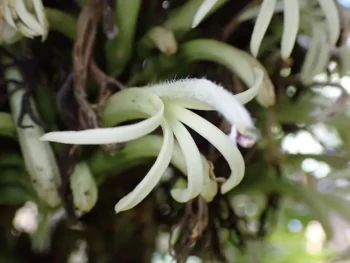
Shipman’s Cyanea: A Rare Hawaiian Treasure Worth Protecting
Meet Shipman’s cyanea (Cyanea shipmanii), one of Hawaii’s most endangered native plants and a stunning example of the islands’ unique botanical heritage. This remarkable perennial shrub isn’t your typical garden center find – and that’s exactly what makes it so special for conservation-minded gardeners.
What Makes Shipman’s Cyanea Special?
This multi-stemmed woody perennial typically grows 13-16 feet tall, creating an impressive tropical specimen with large, dramatic leaves and striking tubular flowers in shades of blue to purple. Native exclusively to Hawaii’s Big Island, Shipman’s cyanea represents millions of years of isolated evolution.
However, there’s something crucial every gardener needs to know: this plant is critically endangered. With a Global Conservation Status of S1 and listed as Endangered in the United States, fewer than 1,000 individuals likely remain in the wild.
Where Does It Grow?
Shipman’s cyanea is endemic to Hawaii, found naturally only on the Big Island. In the wild, it thrives in cool, moist forest environments where filtered sunlight and consistent humidity create perfect growing conditions.
- Species observed
- No observations
Should You Grow Shipman’s Cyanea?
Here’s where things get interesting. While this plant would make a stunning addition to any tropical garden, its endangered status means you should only consider growing it if:
- You can source plants from legitimate conservation programs
- You’re committed to supporting Hawaiian native plant preservation
- You live in USDA hardiness zones 10-11 where it can thrive
- You can provide the specific growing conditions it needs
Never collect plants from the wild – this could push the species closer to extinction.
Growing Conditions and Care
If you’re lucky enough to obtain responsibly sourced Shipman’s cyanea, here’s what it needs:
- Light: Filtered sunlight or partial shade (avoid direct, harsh sun)
- Soil: Well-draining, organic-rich soil that mimics forest floor conditions
- Water: Consistent moisture without waterlogging
- Humidity: High humidity levels typical of tropical forests
- Temperature: Warm tropical conditions year-round
Garden Design and Landscape Role
In the right setting, Shipman’s cyanea serves as a magnificent specimen plant for:
- Native Hawaiian gardens
- Conservation-focused landscapes
- Tropical forest restoration projects
- Educational botanical displays
Its substantial size and unique flowers make it a natural focal point, while its rarity adds meaningful conservation value to your landscape.
Supporting Pollinators and Wildlife
The tubular flowers of Shipman’s cyanea evolved specifically to attract Hawaiian honeycreepers – native birds that are also endangered. By growing this plant (when sourced responsibly), you’re supporting an entire ecosystem of rare Hawaiian species.
The Bottom Line
Shipman’s cyanea represents both an incredible gardening opportunity and a serious conservation responsibility. If you’re passionate about native Hawaiian plants and have the right growing conditions, consider reaching out to botanical gardens or conservation organizations about obtaining responsibly propagated specimens.
Remember: every plant grown in cultivation is a victory for conservation. But only when we source them ethically and grow them with the respect they deserve.