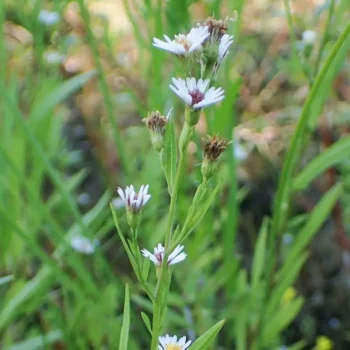
Shore Aster: A Rare Native Gem for Coastal and Wetland Gardens
If you’re looking for a native wildflower that thrives in challenging wet conditions while supporting late-season pollinators, shore aster (Symphyotrichum tradescantii) might be just the plant for your garden. This charming perennial offers delicate beauty and ecological value, though its rarity means you’ll want to source it responsibly.
What is Shore Aster?
Shore aster is a native perennial forb – essentially a non-woody flowering plant that comes back year after year. You might also encounter it under its former scientific names, including Aster tradescantii or Aster saxatilis, as botanists have reclassified many asters into the Symphyotrichum genus in recent years.
This lovely wildflower is native to both Canada and the lower 48 states, specifically thriving in the northeastern regions including New Brunswick, Nova Scotia, Quebec, Maine, Massachusetts, New Hampshire, New Jersey, New York, Rhode Island, Vermont, and Newfoundland.
- Species observed
- No observations
Why Consider Shore Aster for Your Garden?
Shore aster brings several appealing qualities to the right garden setting:
- Late-season beauty: Small white to pale lavender flowers bloom in late summer and fall when many other plants are fading
- Pollinator magnet: These late blooms provide crucial nectar for butterflies, bees, and other pollinators preparing for winter
- Wetland specialist: Perfect for rain gardens, pond edges, or other challenging wet areas where many plants struggle
- Salt tolerance: Excellent choice for coastal gardens where salt spray is a concern
- Low maintenance: Once established, this native requires minimal care
Important Rarity Considerations
Before rushing to plant shore aster, there’s something important to know: this species has a rarity status in some areas. In New Jersey, it’s listed as S2 (imperiled) and appears on the Highlands Listed species roster. This means wild populations are vulnerable and declining.
If you choose to grow shore aster, please ensure you source plants or seeds from reputable native plant nurseries that propagate their stock rather than collecting from wild populations. Never collect seeds or plants from natural areas.
Where Does Shore Aster Shine?
This adaptable native works beautifully in several garden settings:
- Rain gardens: Its facultative wetland status means it thrives in areas that alternate between wet and drier conditions
- Coastal landscapes: Natural salt tolerance makes it perfect for seaside gardens
- Native plant gardens: Adds authentic regional character to naturalized plantings
- Pollinator gardens: Provides late-season nectar when few other natives are blooming
- Wetland restoration projects: Helps stabilize soil while providing habitat
Growing Conditions and Care
Shore aster is surprisingly easy to grow once you understand its preferences:
Sunlight: Performs best in full sun to partial shade
Soil: Prefers moist to wet soils but can tolerate occasional drying. As a facultative wetland plant, it’s happiest with consistent moisture.
Hardiness: Thrives in USDA zones 3-8, making it suitable for most northeastern gardens
Maintenance: This low-maintenance perennial spreads by underground rhizomes, creating natural colonies over time. You may need to divide clumps every few years if they become too large for your space.
Planting and Establishment Tips
Getting shore aster established successfully requires attention to its moisture needs:
- Plant in spring after the last frost for best establishment
- Choose a location that stays consistently moist, especially during the first growing season
- Water regularly until plants are well-established (typically one full growing season)
- Mulch lightly to retain moisture, but avoid heavy mulching that might encourage fungal issues in wet conditions
- Allow plants to spread naturally – this creates the most authentic and beneficial habitat
The Bottom Line
Shore aster is a wonderful choice for gardeners with wet, challenging sites who want to support native biodiversity. Its late-season blooms provide crucial resources for pollinators, while its adaptability to wet conditions makes it invaluable for rain gardens and coastal plantings.
Just remember to source your plants responsibly given its rarity status, and be patient as it establishes – this native beauty rewards gardeners who can provide the moist conditions it craves. Once happy in your garden, shore aster will return year after year, quietly doing its part to support local ecosystems while adding subtle charm to your landscape.