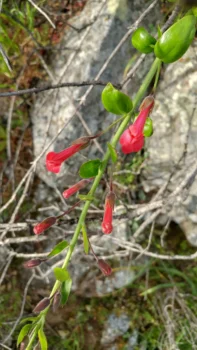
Showy Greenbright: A Rare California Native Worth Protecting in Your Garden
If you’re looking to add a splash of vibrant color to your California native garden while supporting conservation efforts, meet the showy greenbright (Gambelia speciosa). This stunning perennial shrub might not be a household name, but it’s a true gem of California’s coastal regions that deserves a spot in the right garden—with some important caveats.
What Makes Showy Greenbright Special?
Showy greenbright lives up to its name with brilliant tubular flowers in shades of red and orange that practically glow against its evergreen foliage. This native California shrub typically grows as a multi-stemmed woody plant, usually staying under 13-16 feet tall, making it perfect for medium-sized garden spaces.
You might also see this plant listed under its former scientific name, Galvezia speciosa, but don’t let the name confusion fool you—it’s the same spectacular species that hummingbirds absolutely adore.
Where Does It Come From?
This beautiful shrub is native to California, with its natural habitat concentrated in the Channel Islands and coastal southern California regions. It’s perfectly adapted to the Mediterranean climate and coastal conditions of its homeland.
- Species observed
- No observations
A Plant in Need: Understanding Its Rarity
Here’s the important part: Showy greenbright has a Global Conservation Status of S2, which means it’s considered imperiled. With typically only 6 to 20 occurrences and few remaining individuals in the wild (estimated at 1,000 to 3,000), this plant is extremely rare and vulnerable to extinction.
What does this mean for gardeners? If you want to grow showy greenbright, you absolutely must source it responsibly from reputable native plant nurseries that propagate from existing cultivated stock—never from wild-collected plants.
Why Grow Showy Greenbright?
Despite—or perhaps because of—its rarity, there are compelling reasons to include this plant in your garden:
- Wildlife magnet: Those tubular flowers are hummingbird favorites, and butterflies love them too
- Year-round beauty: Evergreen foliage provides structure even when not blooming
- Water-wise: Once established, it’s quite drought tolerant
- Conservation impact: Growing it helps preserve genetic diversity and supports conservation efforts
- Unique garden feature: You’ll have a conversation starter that few other gardeners can claim
Perfect Garden Settings
Showy greenbright shines in:
- Native plant gardens
- Wildlife and pollinator gardens
- Coastal landscapes
- Drought-tolerant garden designs
- Mediterranean-style gardens
It works beautifully as an accent plant or focal point, especially where its flowering display can be appreciated and where hummingbirds have easy access.
Growing Conditions and Care
Showy greenbright thrives in USDA hardiness zones 9-11, making it suitable for most of California and other mild coastal regions. Here’s what it needs:
- Light: Full sun to partial shade
- Soil: Well-draining soil is essential
- Water: Regular water until established, then quite drought tolerant
- Climate: Prefers coastal conditions with mild temperatures
Planting and Care Tips
Fall planting gives showy greenbright the best start, allowing roots to establish during cooler, wetter months. Water regularly the first year, then back off once the plant shows signs of strong growth.
This low-maintenance shrub requires minimal pruning—just remove any dead or damaged branches as needed. The plant’s natural form is quite attractive, so resist the urge to over-shape it.
The Bottom Line
Showy greenbright is a spectacular native plant that can bring both beauty and conservation value to the right garden. However, its imperiled status means this isn’t a plant to grow casually. If you’re committed to responsible sourcing and have the appropriate growing conditions, this rare gem can be a meaningful addition to your landscape.
Remember: only purchase from reputable native plant nurseries, never collect from the wild, and consider yourself a conservation partner in helping preserve this beautiful California native for future generations.